

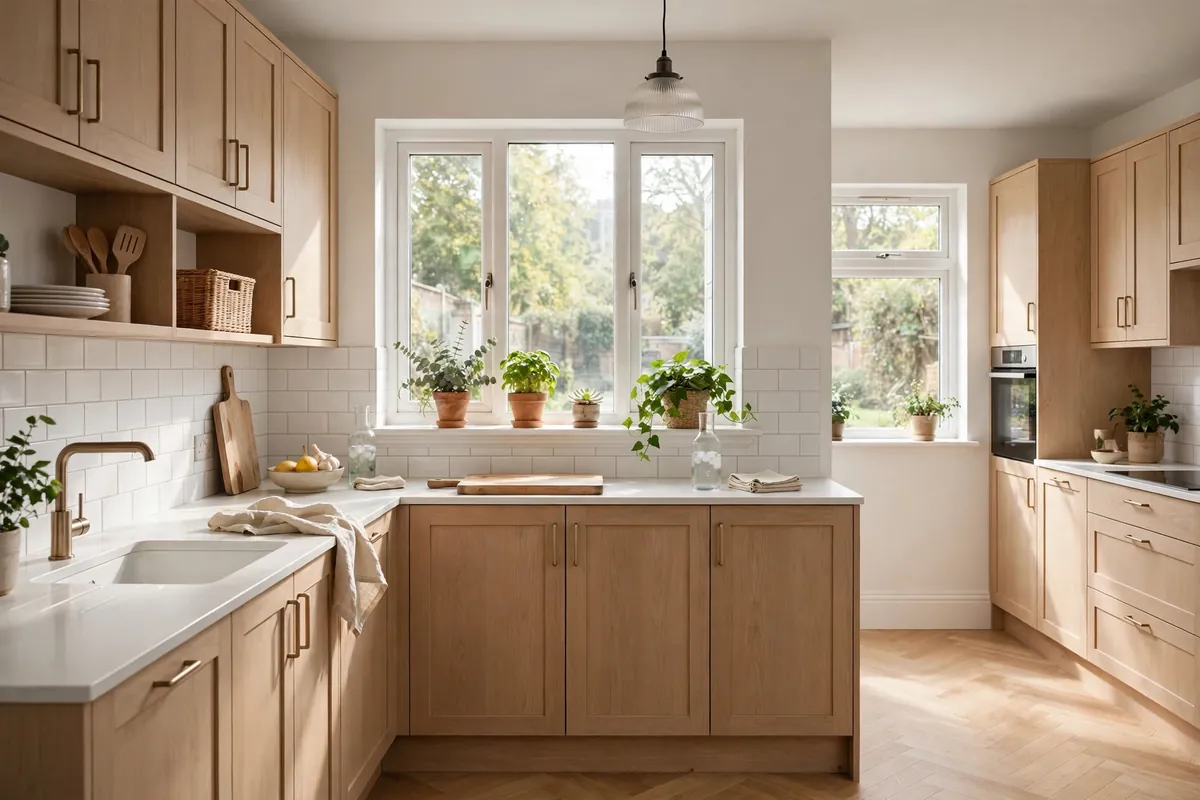
You do not need to rip out a perfectly sound kitchen to make it feel new again. The smartest kitchen renovation ideas start with what you already have, spend money only where it changes how the room looks or works, and leave the layout alone unless it is genuinely causing problems. For most UK households, that means keeping good cabinet carcasses, refreshing doors and worktops, and improving light and storage before considering anything bigger.
The kitchen renovation ideas in this guide show where the money usually goes, which changes give the biggest impact for the least spend, and what to prioritise first. Whether you are planning a gentle refresh over a few weekends or a staged home remodeling project spread across the year, the same rule applies: fix the plan before you buy anything, and get proper quotes for any work you are not doing yourself.
Start With a Plan and a Realistic Budget
Before you look at colours or handles, walk around your kitchen with a notebook and be honest about what is actually wrong with it. Are the cabinets solid but dated? Is the worktop stained or damaged? Is the room dark, short on sockets, or awkward to cook in? Separate that list into three groups: things that are broken or unsafe, things that look tired, and things that would simply be nice to have. On a limited budget, the first group comes first, the second group is where most of your visible transformation will come from, and the third group waits until the essentials are paid for. That simple honesty is what turns kitchen renovation ideas from a wish list into a plan you can actually afford.
Next, set one overall figure you can afford and work backwards from it. Keep a contingency aside for surprises, because older UK homes regularly reveal uneven walls, tired wiring or plumbing that needs attention once work starts. Then divide the rest between cabinets, worktops, appliances, flooring, lighting and labour, and track quotes against each heading as they come in. If one area threatens to swallow the whole pot, that is the moment to scale it back, not after the order has been placed. For broader habits that free up money for projects like this, our guide to the best ways to save money is a useful place to start.
Finally, get like-for-like quotes before you commit. Ask each tradesperson what is included, what is excluded, how long the job should take and when payment is due.
Where the Money Goes, and What to Prioritise First
In most renovations, the biggest costs are rarely the pretty finishing touches. New cabinetry, structural changes, moving plumbing or electrics, and professional labour usually account for the largest share, while paint, handles and lighting cost comparatively little but are what visitors notice first. That is why moving a sink or cooker even a short distance can cost far more than it appears to save, and why keeping services where they are is one of the simplest ways to protect a tight budget.
So prioritise in this order: safety and soundness first, then function, then appearance. A leaking tap, damaged wiring or a failing extractor matters more than a fashionable finish. Next comes anything that affects daily cooking, such as worktop space, storage and task lighting. Cosmetic upgrades come last, not because they matter least to how the room feels, but because they are the easiest to do well on a small budget once the basics are sound.
Kitchen Renovation Ideas That Make the Biggest Difference
The following kitchen renovation ideas are popular for a reason: each one changes a large, visible surface or a detail you touch every day, without paying for a full refit. Work through them in the order that suits your kitchen, and remember that in a wider home remodeling plan, small rooms reward restraint. One strong colour, repeated finishes and uncluttered surfaces usually look more expensive than lots of competing features.
Paint or Wrap Your Cabinet Doors
If your cabinet boxes are sturdy and the layout works, keep them. Painting doors with a suitable kitchen cabinet paint, or having them professionally wrapped or sprayed, can change the whole character of the room at a fraction of the cost of replacement units. Preparation decides the result: remove doors and handles, clean away grease thoroughly, sand lightly, prime where the product requires it, and allow proper drying time between coats. Rushed paintwork over greasy timber rarely lasts, while careful preparation gives a smooth finish that stands up to daily use.
Change Handles and Small Details
Handles are the jewellery of a kitchen, and swapping them is one of the quickest kitchen renovation ideas of all. Measure the distance between screw holes before you order, so new handles fit the existing drilling, and choose a finish that echoes your tap, lighting or appliances for a joined-up look. While you are at it, consider soft-close hinges if yours slam, replace tired sealant around the sink, and refresh the grout. None of these jobs is glamorous, but together they remove the small signs of wear that make a kitchen feel old.
Refresh Worktops Without Starting Again
Worktops cover a large area, so their condition shapes how the whole room reads. If the existing surface is sound, options range from deep cleaning and re-oiling timber to overlay and wrapping products designed for kitchen use. If replacement is unavoidable, laminate has improved enormously and can mimic timber or stone convincingly while remaining one of the more affordable choices. Timber and compact laminate sit in the middle ground, while stone and quartz sit at the premium end and usually need professional templating and fitting. Ask to see samples in your own light before deciding, because colours shift between a showroom and a north-facing UK kitchen.
Add a Splashback or Refresh Your Tiling
A splashback protects the wall behind the hob and sink, and it is also a chance to add pattern or colour without overwhelming the room. Tiles remain a flexible choice, and retiling just the splashback area uses far fewer tiles than a whole wall. If your existing tiles are sound but dated, tile paint or a thorough regrout can lift them for very little. Glass, acrylic and metal panels offer a smooth, wipeable alternative with fewer grout lines, although they need accurate measuring. Keep the design simple if the worktop or floor is busy, and let one surface be the star.
Improve the Lighting
One of the most underrated kitchen renovation ideas is better lighting. Poor lighting makes even a smart kitchen feel dull, while good lighting makes a modest one feel intentional. Aim for layers: ceiling lights for general brightness, under-cabinet lights so worktops are not in shadow, and, where space allows, a softer light for evenings. Swapping dated fittings and moving to warm, consistent bulbs is relatively inexpensive, and under-cabinet strips are a classic budget upgrade because food preparation becomes easier as well as prettier. Any new circuits or relocated fittings need a qualified electrician, so build that cost into your quotes rather than treating lighting as an afterthought.
Tackle Flooring Last, but Plan It Early
Flooring changes the feel of a kitchen underfoot as much as on the eye. Luxury vinyl tile and modern laminate are popular budget-friendly choices because they are warm underfoot, forgiving of small imperfections and available in timber and stone effects, while sheet vinyl is often cheaper still and has no grout lines to clean. Tiles are hardwearing but usually cost more to lay, especially if the subfloor needs preparation. Order samples first, and check how the thickness affects doors and appliances. Once the hard work is done, our guide to the best home cleaning solutions will help you keep new surfaces looking fresh.
Kitchen Design Tips That Cost Little or Nothing
Good kitchen design is mostly about how the room works, not how much it cost. Start with the route between fridge, sink and hob: if you are constantly crossing the room with hot pans or raw ingredients, moving a small appliance, a bin or a storage box can sometimes ease the flow without touching the units at all. Keep everyday items close to where you use them, store rarely used gadgets elsewhere, and be ruthless about worktop clutter, because clear surfaces make any kitchen look larger and calmer.
Storage is the other free upgrade. Drawer organisers, shelf risers, hooks inside cupboard doors and a simple rail for utensils all cost little and save daily frustration. If you are spreading kitchen renovation ideas across several months, live with each change before funding the next; you may find that better storage removes the urge for extra units altogether. The same start-small logic applies elsewhere in the house, as our home gym setup ideas on a budget show: use the space you have well before paying to expand it.
What to Do Yourself and What to Leave to the Trades
Doing some work yourself is one of the most effective ways to stretch a budget, provided you stay within your competence. Several kitchen renovation ideas are well suited to a careful beginner, including painting and decorating, fitting handles, putting up shelves, simple tiling on a flat wall and laying some click-together flooring. Clearing the room, removing old units where it is safe to do so, and disposing of waste can also reduce labour on a professional quote, so ask what would help before you start.
Gas work, most electrical work beyond like-for-like replacements, plumbing alterations and structural changes belong with qualified professionals. In the UK, gas appliances must be handled by a Gas Safe registered engineer, and electrical work in kitchens can fall under building regulations, so check what certification you should receive and keep it safe for when you sell. Paying for expertise here is not a failure of thrift; it is how you avoid leaks, faults and insurance problems that cost far more to put right.
Where Not to Cut Corners
Save money on surfaces you can change again later, not on the hidden parts you cannot. Ventilation is a good example: a decent extractor that actually vents steam and cooking smells protects paintwork, cabinets and plaster from moisture damage. Likewise, do not skimp on plumbing connections, electrical safety, or the preparation beneath flooring and tiles, because failures there ruin the finishes on top. Buy the best taps, hinges and drawer runners you can afford within the plan, since these moving parts are used many times a day and cheap versions announce themselves quickly.
A Sensible Order of Work
Whatever kitchen renovation ideas you choose, the order matters as much as the budget. Start with planning, measuring and quotes, then any professional first-fix work such as plumbing and electrics. Decorating and cabinet painting come next, followed by worktops, splashbacks and flooring in the sequence your fitters advise, with final touches such as handles and sealant at the end. Working in this order prevents new paint being splashed, new floors being scratched by ladders, and finished surfaces being cut or drilled unnecessarily. Keep receipts and guarantees together, and check every drawer, door and tap before signing off.
Final Thoughts
The best kitchen renovation ideas are rarely the most dramatic ones. They are the changes that suit your home, your cooking and your budget: sound cabinets kept and refreshed, hardworking surfaces chosen honestly, light and storage improved, and skilled help bought in where it counts. Take it step by step, get quotes in writing, and resist the urge to upgrade everything at once. A kitchen that has been improved thoughtfully, in stages you can afford, will serve a real household far better than a rushed refit that leaves nothing in reserve.
