

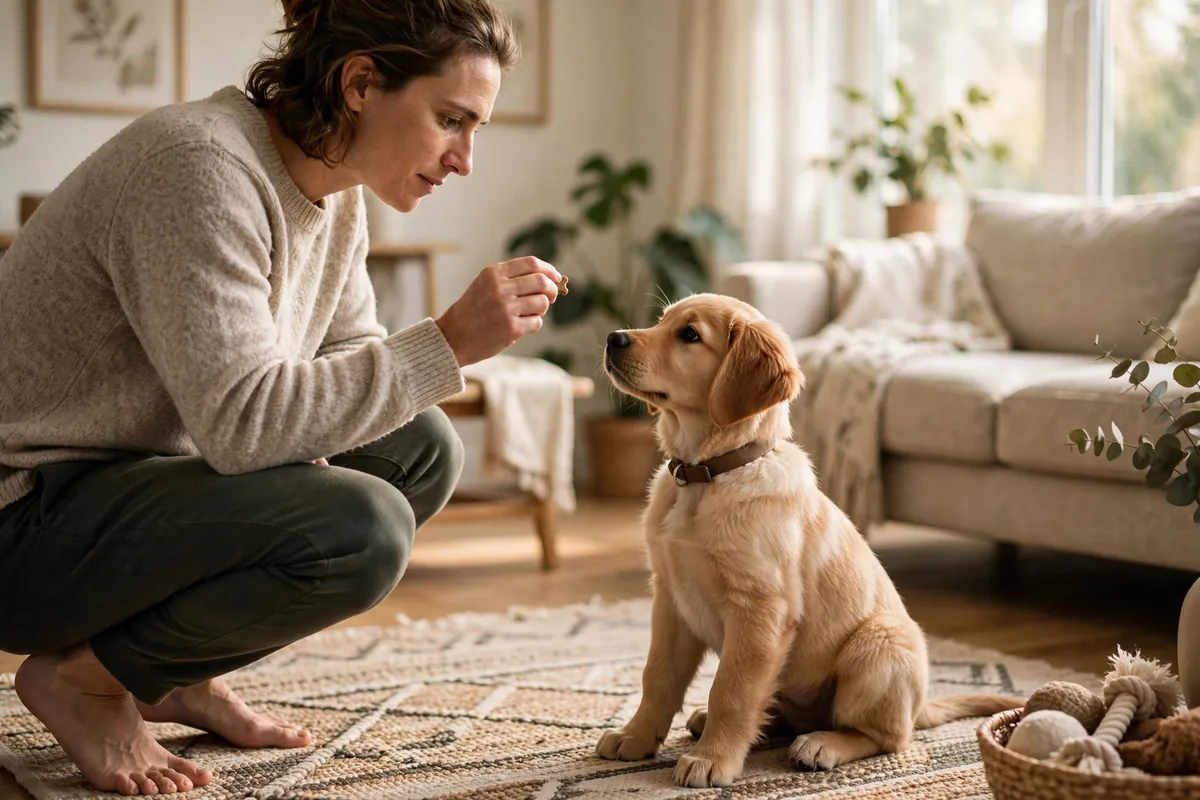
Bringing a puppy home is exciting, but the first few days can feel hectic if you do not know where to start. The good news is that good puppy training tips are simple, kind and easy to fit around family life. Start today with three things: a calm routine, frequent toilet trips outside, and rewards for every behaviour you like. That is the whole foundation. You do not need special equipment, long lessons or a strict voice. You need short sessions, clear cues and patience while your puppy learns how your home works. This guide walks you through a first-week routine, toilet training, first commands, crate training and socialisation, step by step, so you can build good habits from the start.
Puppy Training Tips That Work: Start With Positive Reinforcement
Positive reinforcement means rewarding the behaviour you want, so your puppy chooses to repeat it. When your puppy sits, toilets outside or comes when called, mark the moment with a cheerful yes and give a small treat, praise or a favourite toy straight away. Timing matters more than treat size, so reward within a second or two.
Reward-based puppy training tips work because puppies learn quickly what pays off. They also keep learning fun and protect the trust between you and your puppy. Never use punishment, shouting, smacking or pushing your puppy into position. Those methods can create fear and can make problems such as barking, toileting indoors or guarding worse, not better.
Keep treats small and soft, so sessions can move quickly without filling your puppy up. For less exciting rewards, use part of the daily food ration. Everyone in the home should use the same cues and rules, otherwise your puppy has to guess what each person wants.
Your First-Week Routine at Home
Puppies settle faster when days follow a predictable pattern. In the first week, build your routine around sleep, toilet trips, meals, play and short training moments. Young puppies sleep a lot, and overtired puppies bite, race around and stop listening, so quiet rest is part of training, not a break from it.
A simple pattern looks like this. Wake up and go straight outside for a toilet trip. Then breakfast, another toilet trip, a short play or training session, and a nap. Repeat through the day, with meals at regular times and a final toilet trip last thing at night. Take your puppy out after waking, eating, drinking, playing and any excitement, as well as at least once an hour while they are awake at first.
Set up one safe area with a bed, water, chew toys and puppy pads or newspaper near the door only if you cannot get outside quickly. A stair gate can help you supervise without shutting your puppy away from the family. If you are choosing a soft comfort toy for that space, our guide to choosing your first Douglas Dog in the UK shows what size and style to look for. Simple puppy training tips like a safe area and a steady routine make the first week calmer for everyone.
Toilet Training Step by Step
Toilet training is usually the first priority, and consistency brings results faster than any product. Choose one toilet spot outside, ideally on grass near your home, and take your puppy there on a lead every time. Stand quietly, let them sniff, and wait. When they finish, praise warmly and give a treat outside, not back indoors.
If nothing happens after a few minutes, go back inside, supervise closely or pop your puppy in their crate for ten minutes, then try again. Watch for sniffing, circling or wandering away mid-play. Those signs often mean a trip outside is needed right away. Among the most practical puppy training tips for toilet training is simply taking your puppy out more often than you think you need to.
Accidents will happen. Clean them calmly and thoroughly with an enzymatic cleaner, so no scent remains to draw your puppy back. Our guide to best home cleaning and freshening solutions can help you keep floors fresh while you train. Never tell your puppy off for an accident you find later. They cannot connect your reaction with something they did earlier, so simply clean up and add more toilet trips.
First Commands to Teach Your Puppy
Good dog obedience training starts with a few useful cues taught one at a time. Keep each session to two to five minutes, end while your puppy is still keen, and practise in a quiet room before you try the garden. These puppy training tips will help each cue stick.
Name Response
Say your puppy’s name once in a bright voice. When they look at you, say yes and reward. Repeat a few times, then play. Soon your puppy learns that their name means good things happen when they pay attention to you.
Sit
Hold a treat just above your puppy’s nose and move it slowly back over their head. As their bottom touches the floor, say sit, then yes and reward. After several repetitions, add the word before you move your hand, and gradually fade the treat lure.
Come
Crouch down, open your arms and call your puppy’s name followed by come in an inviting voice. Reward generously when they reach you, and gently hold their collar before you let them go again. Never call your puppy to tell them off, or coming to you will stop feeling safe.
Stay
Ask for a sit, hold your palm out, say stay and take one small step back. Return straight away and reward if your puppy holds position. Build distance and time very slowly, one second at a time, and release with a clear word such as okay.
Leave It
Hold a treat in a closed fist. When your puppy stops sniffing and pulls away, say yes and reward from your other hand. Practise little and often, so your puppy learns that ignoring something interesting earns something better from you.
Crate Training Basics
A crate can become your puppy’s cosy den and a helpful tool for rest, travel and toilet training, but only if you introduce it kindly. Leave the door open, feed meals near and then inside it, and hide treats in the bedding for your puppy to find. Let them wander in and out freely at first. One of the kindest puppy training tips is to let your puppy choose to enter the crate, rather than being placed inside before they feel safe.
When your puppy goes in happily, close the door for a few seconds while you sit nearby, then open it before they worry. Build the time slowly, and give a safe chew to enjoy inside. A crate should never be used as punishment, and young puppies should not be left in one for long stretches during the day.
At night, keep the crate near you at first if that helps your puppy settle. Some puppies need a toilet trip in the night for the first weeks. That is normal, and it passes as their bladder grows and the routine becomes familiar.
Socialisation at Home and Outside
Socialisation means helping your puppy feel relaxed about everyday life, not meeting as many dogs as possible in one weekend. At home, let them hear the washing machine, vacuum cleaner and doorbell at a distance, paired with treats and calm praise. Invite a few sensible visitors, let your puppy approach in their own time, and ask guests not to pick them up if they step back.
Outside, start before vaccinations are complete only in ways your vet advises, such as carrying your puppy to watch the world go by. Once your vet says walks are fine, keep them short, let your puppy sniff, and watch other dogs from a comfortable distance before greeting calm, friendly dogs briefly on lead. Short car journeys to nowhere in particular also help, so your puppy is ready for family days out later. Our cheap travel tips for families are useful when you start planning those trips together.
Never force your puppy towards something that worries them. Distance, treats and time work better than dragging or flooding them with new experiences. Calm puppy training tips like these build confidence that lasts well beyond the first few weeks.
Reading Pet Behavior: What Your Puppy Is Telling You
Learning to read pet behavior makes training kinder and easier. A loose, wiggly body, soft eyes and a wagging tail held at a natural height usually show a relaxed puppy. A tucked tail, flattened ears, yawning, lip licking or turning the head away can signal stress or tiredness, even when there is no growling or barking. Understanding signals is among the most overlooked puppy training tips, because it helps you stop a session before your puppy becomes overwhelmed.
Growling is information, not naughtiness. If your puppy growls over food, a chew or being disturbed while resting, do not punish the growl. Give them space and change the situation calmly. A puppy who can communicate early warnings is safer than one who has learned not to warn.
Watch the whole puppy, not one signal alone, and think about context. A puppy who suddenly toilets indoors, chews more or stops playing may be tired, teething, unwell or overwhelmed, rather than stubborn.
Keep Sessions Short and Frequent
Short, frequent sessions are one of the most useful puppy training tips in this guide. Two to five minutes, several times a day, fits a puppy’s attention span and turns training into part of normal life. Practise one cue before breakfast, recall in the hallway at lunchtime, and leave it during evening play.
This steady approach is how calm dog obedience training is built at home, without drilling or pressure. Finish each session with play or a cuddle, so your puppy looks forward to the next one.
Common Beginner Mistakes to Avoid
Most beginners make the same few mistakes, and all of them are easy to fix. The first is expecting too much too soon. Puppies forget, get distracted and need the same lesson repeated in different rooms before it feels reliable.
Repeating a cue over and over is another common trap. Say it once, help your puppy succeed, and reward. Training when you feel frustrated, letting children handle sessions unsupervised, and using different words for the same cue also slow progress. If a session goes wrong, make the next step easier, reward a simple success, and try again later.
Finally, do not compare your puppy with a neighbour’s dog or a video online. Breeds, ages and temperaments differ, and steady progress at your puppy’s pace is what matters. The best puppy training tips are the ones you can repeat calmly every day.
When to Ask a Vet or Accredited Trainer for Help
This guide gives general guidance only. If your puppy shows aggression, panic, excessive biting that does not improve, resource guarding, or sudden changes in behaviour, appetite or toileting, speak to your vet first to rule out pain or illness. Your vet can also refer you to an accredited, reward-based trainer or behaviourist if you need hands-on help.
Conclusion
Training a puppy at home does not need to feel overwhelming. Use these puppy training tips little and often, reward what you like, keep routines steady, and let your puppy rest as well as learn. Most puppies thrive on that simple pattern. Within a few weeks, the toilet trips, cues and calm moments you practised will start to join up into everyday good manners, and you will have built a trusting start to life together as a family.
