

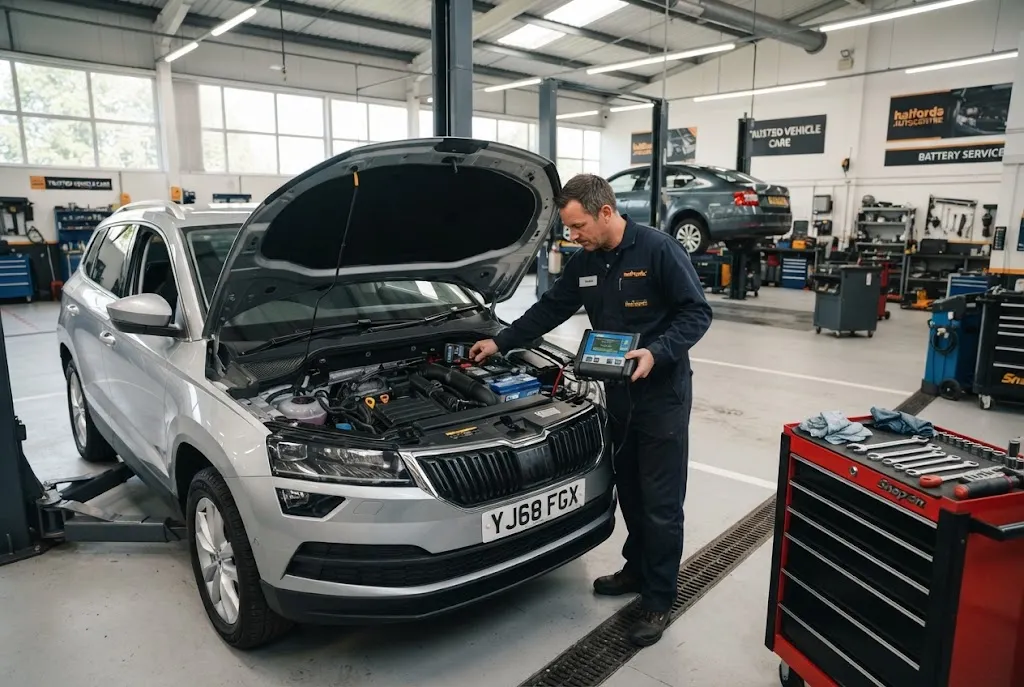
Auto battery service is an important part of keeping a vehicle reliable, particularly when a car is used every day for commuting, school runs, shopping or longer journeys. A battery can gradually lose performance without producing obvious symptoms, and a weak battery may eventually leave the vehicle unable to start. Regular testing, appropriate maintenance and timely replacement can help reduce the risk of an unexpected breakdown.
The battery is also closely connected to the vehicle’s wider electrical and starting systems. For that reason, a starting problem should not automatically be treated as a simple battery failure. A professional inspection can help determine whether the battery, charging system, connections or another electrical component is responsible.
What Does Auto Battery Service Include?
Auto battery service can cover several different forms of battery-related assistance. Depending on the vehicle and the provider, this may include battery testing, charging, replacement, installation and checks of the vehicle’s starting or charging system.
A proper battery assessment should establish the condition of the battery rather than simply assuming that it needs to be replaced. Testing can provide useful information about its ability to hold and deliver the power required to start the vehicle.
When a battery has reached the end of its useful life, battery replacement may be the appropriate solution. However, the replacement battery must be suitable for the vehicle’s specifications and electrical requirements.
Signs Your Vehicle May Need Battery Service
Battery problems can develop gradually. Drivers may notice several warning signs before the battery fails completely.
- The engine takes longer than usual to start.
- The starter motor sounds slower or weaker.
- Electrical equipment appears weaker when starting the car.
- Dashboard warning lights appear unexpectedly.
- The vehicle repeatedly needs a jump start.
- The battery is visibly damaged, swollen or leaking.
- The vehicle has difficulty starting after being parked for a period.
These symptoms can have different causes. For example, repeated starting problems may be connected to the alternator, starter motor, electrical connections or another fault rather than the battery alone. A diagnostic check is therefore useful when symptoms continue after charging or replacing the battery.
Why Battery Testing Matters
Battery testing is one of the simplest ways to establish whether a battery is performing as expected. A technician can assess the battery’s condition and determine whether it is suitable for continued use.
This can be particularly useful before winter or before a long journey. Cold weather can place additional demands on a vehicle’s starting system, while a battery that is already weak may struggle under those conditions.
Testing can also help prevent unnecessary replacement. If the battery is still healthy, replacing it simply because the vehicle has experienced one starting problem may not address the actual cause.
Battery Charging vs Battery Replacement
Battery charging can restore available charge when a battery has become discharged. This may happen if electrical equipment has been left running while the engine was switched off, or if the vehicle has not been driven for an extended period.
However, charging a battery does not necessarily restore a battery that has deteriorated internally. If testing shows that the battery can no longer hold an appropriate charge or deliver sufficient starting power, replacement may be required.
Repeatedly charging a failing battery may only provide a temporary solution. Identifying why the battery has discharged is also important, especially when the problem occurs more than once.
When Do You Need Battery Replacement?
Battery replacement is generally considered when testing shows that the existing unit is no longer capable of reliably meeting the vehicle’s requirements. Age, usage, charging problems and environmental conditions can all affect battery performance.
Do not select a replacement based solely on physical size. The battery must be compatible with the vehicle and its electrical system. Some modern vehicles have specific battery technologies and may require additional procedures after installation.
A qualified technician can check the vehicle’s requirements and identify an appropriate replacement. This is especially important for vehicles with sophisticated electrical systems or stop-start technology.
Professional Battery Installation
Battery installation involves more than physically fitting a new unit into the battery tray. The technician should ensure that the connections are secure and that the replacement battery is correctly matched to the vehicle.
Some modern cars may also require battery registration or configuration after replacement. The exact procedure depends on the manufacturer and vehicle system.
Incorrect installation can create electrical problems or prevent the charging system from operating as intended. For this reason, drivers who are unsure about the correct battery specification or installation procedure should seek professional assistance.
Vehicle Batteries and Modern Cars
Modern vehicle batteries support more electrical functions than many older vehicles. In addition to starting the engine, a battery can support lighting, infotainment, electronic controls, safety systems and other equipment.
Vehicles with extensive electrical equipment may place greater demands on the battery, particularly when the car is used for frequent short journeys. Short trips may provide less opportunity for the charging system to replenish energy consumed during starting.
This does not mean that every short-trip vehicle needs a new battery. Regular testing can provide a more accurate picture of battery condition.
Battery Maintenance Tips for UK Drivers
Simple habits can help drivers monitor battery health and identify potential problems earlier.
- Pay attention to slow or unusual engine starting.
- Avoid leaving lights or electrical accessories running when the engine is off.
- Keep battery connections clean and secure where appropriate.
- Arrange testing if the vehicle repeatedly struggles to start.
- Follow the manufacturer’s recommendations for battery maintenance.
- Check the battery before demanding periods such as winter travel or long journeys.
Drivers should not attempt to handle a damaged or leaking battery without appropriate knowledge and protective measures. When in doubt, professional inspection is the safer option.
What Causes a Car Battery to Go Flat?
A flat battery can have several possible causes. Leaving lights or other electrical equipment switched on is one obvious possibility, but repeated discharge can also indicate an underlying problem.
A faulty alternator or charging system may fail to replenish the battery correctly. Parasitic electrical drain can also gradually consume power while the vehicle is parked. A battery that has deteriorated internally may discharge more easily as well.
If a vehicle repeatedly requires jump-start services, the underlying cause should be investigated instead of relying on jump starting as a permanent solution.
Jump-Start Services for Unexpected Problems
Jump-start services can provide practical assistance when a vehicle cannot start because of a discharged battery. A jump start can get the vehicle running, but it does not necessarily resolve why the battery became flat.
After a jump start, the battery and charging system should be assessed if the problem is unexpected, repeated or accompanied by other symptoms. Drivers should also follow the vehicle manufacturer’s instructions for jump starting because incorrect connections can damage electrical components.
If the battery cannot safely hold a charge, professional roadside battery help may include testing and replacement rather than simply restarting the vehicle.
Roadside Battery Help When You Are Stranded
Roadside battery help can be particularly valuable when a vehicle fails to start away from home. Depending on the provider, assistance may involve diagnosing the battery, attempting a jump start or replacing the battery if a suitable replacement is available.
When requesting assistance, provide accurate information about the vehicle and describe the symptoms. This can help the technician arrive with appropriate equipment and, where available, a compatible replacement battery.
If your car has experienced repeated battery problems, roadside assistance should be viewed as an opportunity to identify the cause rather than simply restarting the vehicle each time.
Auto Battery Service and Wider Vehicle Maintenance
Battery care is one part of a wider vehicle maintenance routine. A vehicle that is reliable in one area can still have safety or mechanical problems elsewhere.
Regular vehicle safety checks can help assess tyres, brakes, suspension and steering alongside other important components. This is particularly useful for families who depend on their vehicles for regular journeys.
Scheduled maintenance can also be organised through car service plans. A structured approach makes it easier to keep track of servicing while remembering that individual components can require attention between scheduled appointments.
For mechanical faults beyond the battery, drivers may need auto repair services. Engine, gearbox, clutch, exhaust and electrical problems should be diagnosed according to their individual symptoms rather than assumed to be battery-related.
Battery Problems and Electrical Repairs
Some battery symptoms are actually signs of a wider electrical issue. If a newly charged or replaced battery becomes flat again shortly afterward, the vehicle should be inspected.
An alternator that is not charging correctly, a damaged connection or an electrical drain could be responsible. In these situations, electrical repair may be required instead of another battery replacement.
Accurate diagnosis is therefore important. Replacing batteries repeatedly without investigating the underlying cause can become expensive and may leave the original fault unresolved.
How to Choose a Battery Service Provider
When choosing a provider, look for a service that can test the battery rather than simply offering replacement. Ask whether the provider can also assess the charging system if the battery has repeatedly gone flat.
Before agreeing to replacement, confirm the battery specification, warranty terms and installation arrangements. If the vehicle requires battery registration or another post-installation procedure, ask whether that work is included.
For roadside assistance, confirm whether the service includes testing, jump starting and replacement options. Clear information can make an unexpected breakdown easier to manage.
Keep Your Vehicle Ready to Start
A dependable starting system is essential for everyday driving. Auto battery service can help UK drivers identify weak batteries, deal with discharged units and arrange appropriate replacement when necessary.
The key is to distinguish between a temporarily flat battery and a battery that has reached the end of its useful life. Testing provides useful information, while repeated starting problems should prompt further investigation into the vehicle’s charging and electrical systems.
For families, combining battery care with regular vehicle safety checks and planned servicing can create a more organised approach to vehicle ownership. Keeping maintenance records and responding promptly to warning signs can also reduce the likelihood of being caught unprepared by a preventable problem.
Final Thoughts on Battery Maintenance
Vehicle batteries are easy to overlook because they often work without requiring daily attention. Yet when battery performance deteriorates, the result can be an inconvenient failure to start.
Regular battery testing, appropriate battery maintenance and timely replacement can help keep the vehicle’s starting system dependable. If a battery repeatedly loses charge, investigate the underlying electrical or charging system rather than relying on repeated jump starts.
Whether you need routine testing, battery replacement, charging or roadside assistance, choose a service provider that can explain the condition of the battery and the reason for any recommended work. That approach helps turn battery maintenance from an unexpected emergency into a manageable part of responsible vehicle ownership.
