

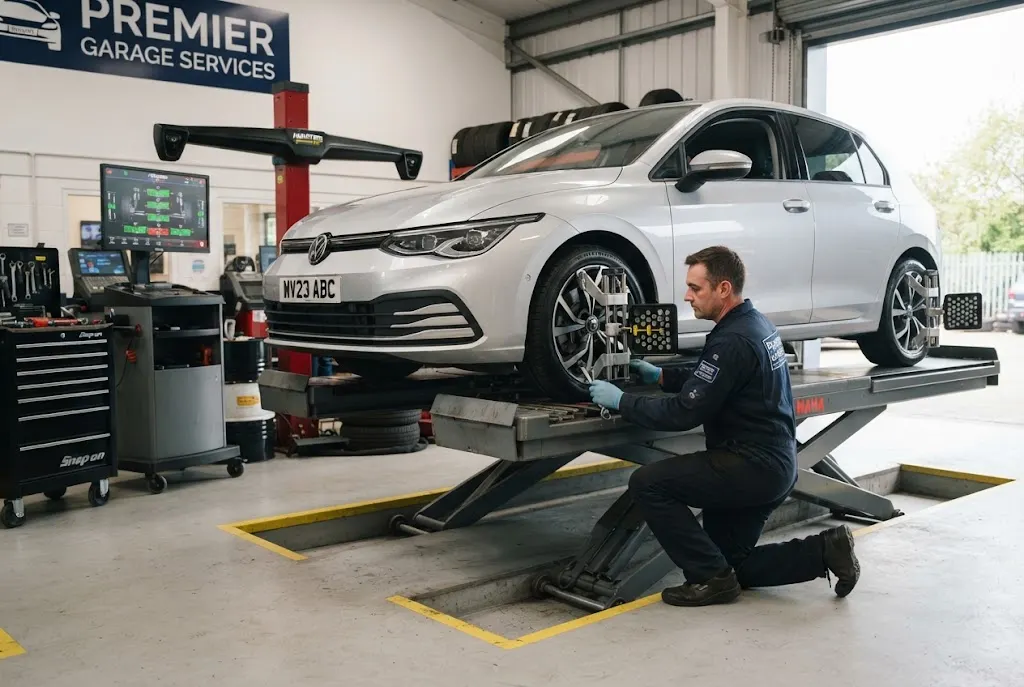
For UK drivers, regular checks are particularly useful after hitting potholes or kerbs, replacing tyres, or noticing a change in how the vehicle handles. Wheel alignment is also closely connected with wheel balancing, steering alignment and general tyre condition, so understanding the differences can help you decide when professional attention is needed.
What Is Wheel Alignment?
Wheel alignment is the process of checking and, where necessary, adjusting the angles of the wheels so they match the vehicle manufacturer’s specifications. Despite the common term “wheel tracking”, the work concerns the alignment geometry of the vehicle rather than simply pointing the wheels straight ahead.
Alignment geometry commonly involves three key measurements: camber, caster and toe. Camber describes the inward or outward angle of the wheel when viewed from the front. Caster relates to the steering axis and contributes to steering behaviour and stability. Toe describes whether the wheels point slightly towards or away from each other when viewed from above.
When these angles are outside their intended ranges, the tyres may not meet the road correctly. That can contribute to uneven wear, handling changes and a less settled driving experience.
Signs You May Need Wheel Alignment
Alignment problems do not always produce an obvious warning. However, several driving and tyre-related symptoms can indicate that the geometry should be checked.
Your Car Pulls to One Side
If the vehicle consistently moves towards the left or right when you are trying to drive straight on a suitable road, alignment may be one possible cause. Other issues can also create similar symptoms, so a proper inspection is important before assuming alignment is responsible.
The Steering Wheel Is Off Centre
A steering wheel that sits noticeably to one side while the vehicle is travelling straight can indicate an alignment issue. It is worth having the steering and suspension geometry inspected rather than simply adjusting your driving position to compensate.
Uneven Tyre Wear
One of the clearest reasons to investigate alignment is unusual tyre wear. If one edge of a tyre is wearing faster than the rest of the tread, incorrect wheel angles may be contributing to the problem. Incorrect tyre pressure, suspension problems and other factors can also cause uneven wear.
Vibration or Unsettled Handling
Vibrations can have several causes, including wheel imbalance, tyre problems and suspension faults. If you experience vibration alongside steering or tracking issues, a garage can assess the complete wheel and tyre setup rather than treating one symptom in isolation.
Wheel Alignment vs Wheel Balancing
Wheel alignment and wheel balancing are different services, although both can affect driving comfort and tyre performance.
Alignment concerns the angles and geometry of the wheels in relation to the vehicle. Balancing concerns the distribution of weight around a wheel and tyre assembly. An imbalance can create vibration, particularly as speed increases, while incorrect alignment can contribute to pulling, steering changes and uneven tyre wear.
For that reason, a driver experiencing vibration should not automatically assume that alignment is the only issue. A professional inspection can determine whether wheel balancing, tyre condition, alignment or another component needs attention.
How Wheel Tracking Helps With Tyre Wear
Wheel tracking is commonly used as another term for checking or adjusting wheel alignment, particularly the toe settings. Correct tracking helps the tyres follow the intended path instead of being forced to scrub against the road surface.
When tracking is incorrect, the tread can wear unevenly and tyres may require replacement sooner than expected. Regular visual checks can help identify unusual patterns early, although some alignment problems are easier to detect with proper measurement equipment.
The RAC notes that misaligned wheels can contribute to uneven tyre wear and handling problems, while its guidance also recommends checking alignment when symptoms such as pulling to one side or an off-centre steering wheel appear. RAC’s wheel alignment guidance provides additional information for UK motorists.
When Should You Check Wheel Alignment?
There is no single interval that suits every vehicle and driver. Instead, alignment should be considered when there is a noticeable change in handling or after an event that could have affected the wheel geometry.
It can be sensible to arrange an inspection after hitting a significant pothole or kerb, following certain suspension repairs, or when fitting new tyres if there are signs of an existing alignment problem. The condition of the roads you regularly use can also influence how often checks become necessary.
If your vehicle already shows uneven wear or steering symptoms, waiting for a routine service may not be the best approach. An early inspection can help identify whether the issue is related to alignment or another mechanical component.
What Affects Alignment Cost?
Alignment cost varies between garages and vehicles. The price can depend on whether the garage checks the front axle only or performs a more comprehensive four-wheel alignment, as well as the vehicle’s design and whether additional repairs are required.
The RAC reported in July 2026 that UK drivers could expect to pay around £80–£90 for front and rear wheel realignment, based on pricing data it cited from WhoCanFixMyCar. Actual prices can differ by vehicle, location and garage, so it is sensible to ask what the quoted service includes before booking.
A low alignment price is not necessarily the only consideration. If worn suspension or steering components are preventing the correct settings from being achieved, those underlying problems may need attention first.
Why Correct Alignment Supports Smoother Driving
Correct wheel geometry can make a vehicle feel more settled and predictable. When the tyres are positioned according to the manufacturer’s specifications, the vehicle can track more consistently and the driver does not have to compensate constantly for unwanted movement.
Good alignment can also support more even tyre wear. Since tyres are a critical contact point between the vehicle and road, maintaining them alongside appropriate tyre pressure and regular inspections is an important part of routine vehicle care.
For families who use the same vehicle for commuting, school runs and longer journeys, paying attention to steering behaviour can be particularly useful. Small changes in handling are easier to address when they are identified before they become more significant tyre or suspension problems.
Wheel Alignment and Vehicle Stability
Vehicle stability depends on many systems working together, including tyres, suspension, steering and braking components. Alignment is one part of that wider picture.
If the steering feels different from normal, the vehicle pulls unexpectedly or the tyres develop unusual wear patterns, a professional inspection can help identify the cause. Correcting an alignment issue where one exists may restore more predictable handling, but it should not be treated as a substitute for checking other components.
This is particularly important after pothole impacts. A hard impact can potentially affect tyres, wheels, steering or suspension as well as alignment. Looking at the complete system gives a more reliable picture of the vehicle’s condition.
How to Look After Your Wheels and Tyres
Wheel alignment works best as part of a broader tyre-care routine. Check tyre pressures regularly using the vehicle manufacturer’s recommended figures, inspect tread and sidewalls for visible problems, and pay attention to changes in steering or ride quality.
It is also useful to address unusual vibrations or tyre wear rather than continuing to drive until the problem becomes obvious. Correct wheel balancing, suitable tyre pressures and properly maintained suspension can all contribute to consistent tyre performance.
If you are planning wider vehicle maintenance, include wheel and tyre condition in the overall inspection rather than treating alignment as an isolated service.
Frequently Asked Questions About Wheel Alignment
Is wheel alignment the same as wheel tracking?
The terms are often used interchangeably in everyday garage language. Wheel tracking commonly refers to checking and adjusting wheel alignment, particularly the toe angles.
Can bad alignment cause tyre wear?
Yes. Incorrect wheel angles can contribute to uneven or accelerated tyre wear. However, tyre pressure, suspension condition, road surfaces and driving habits can also affect wear patterns.
Does wheel balancing fix alignment?
No. Wheel balancing and alignment address different problems. Balancing corrects uneven weight distribution in the wheel and tyre assembly, while alignment deals with wheel geometry and positioning.
How much does wheel alignment cost?
The price varies by vehicle, garage and the type of alignment required. UK pricing can commonly fall within the tens of pounds, with more comprehensive services costing more. Always confirm exactly what is included in a quotation.
Should alignment be checked after hitting a pothole?
It can be sensible, particularly if the impact was significant or you subsequently notice pulling, steering changes, vibration or unusual tyre wear. A garage can check alignment along with the tyre, wheel, steering and suspension components.
Final Thoughts
Wheel alignment is an important part of maintaining predictable steering, even tyre wear and a comfortable driving experience. Signs such as pulling to one side, an off-centre steering wheel or unusual tyre wear should not be ignored. At the same time, vibration does not automatically mean an alignment problem because wheel balancing, tyres and suspension can produce similar symptoms.
By combining alignment checks with sensible tyre care and routine auto services, drivers can take a more complete approach to vehicle maintenance. Early attention to changes in handling can help identify problems before they develop into more expensive repairs or premature tyre replacement.
