

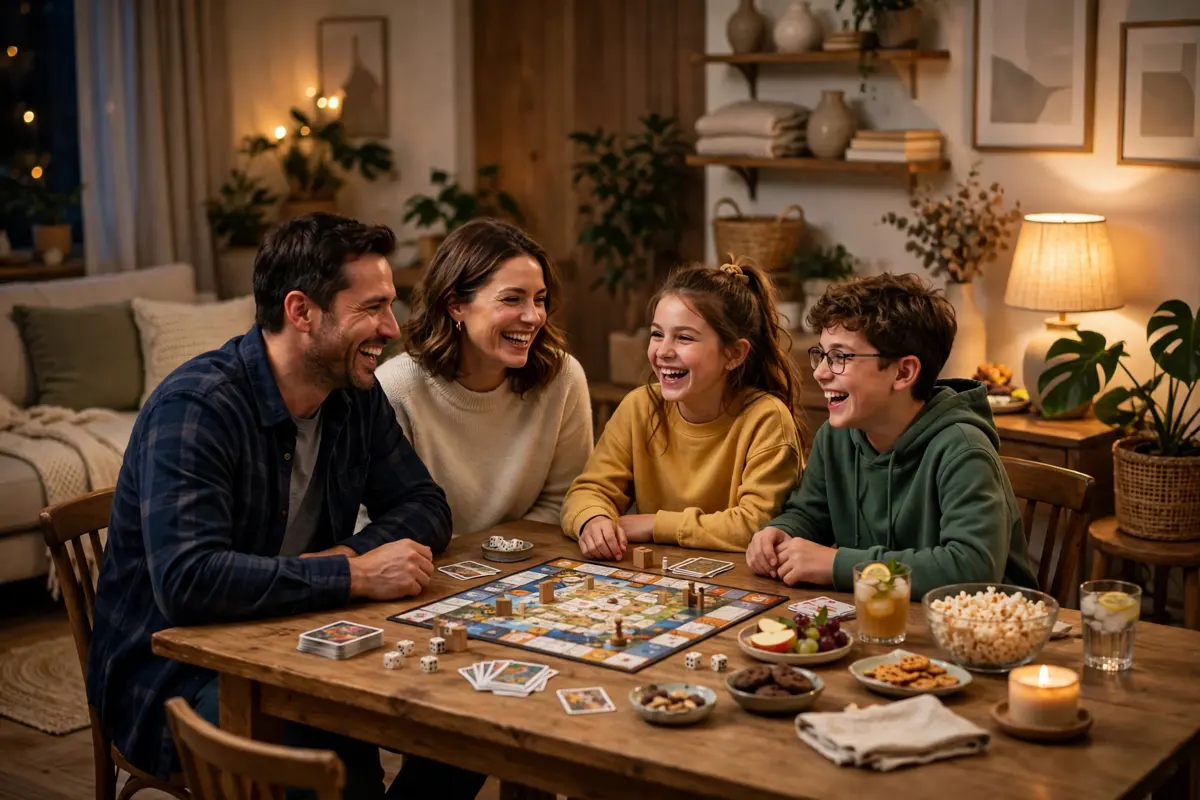
A family games night sounds simple — pick a game, sit everyone down, have fun — yet plenty of attempts end with one person dominating, one person on their phone, and someone insisting the rules were different last time. The difference between a flat evening and one people ask to repeat is rarely the game itself. It is the small bits of hosting around it: the right mix of games for the ages in the room, a start time that suits the youngest player, snacks within reach, and an atmosphere where winning matters just enough to be exciting and not enough to spoil anything. Here is how to host a family games night that runs smoothly and becomes a habit rather than a one-off.
Pick games for the group you actually have
The most common mistake is choosing a game you love rather than a game your group can all play. A strategy game with a forty-page rulebook will lose younger children and tired adults before the first turn. Aim for a main game that everyone present can understand within five minutes of explanation, and keep a second, simpler game in reserve for later in the evening when energy dips. Card games travel well here: they are cheap, quick to teach and easy to join late. If children are playing, favour games with short rounds so nobody waits long between turns, and where luck plays a part — a game of pure skill lets the strongest player win every week, which is fun for exactly one person. Cooperative games, where the table wins or loses together against the game itself, are an excellent choice for mixed ages and mixed competitiveness.
Set a rhythm and make it regular
Games nights work best as a fixture, not an event. Pick a regular slot — the same evening each week or fortnight — and protect it the way you would any other plan. A predictable rhythm is what turns an ordinary evening into something children plan around and remember; it works for the same reason a settled morning routine for a productive day works: nobody has to renegotiate it each time. Keep the whole thing to about two hours, and finish while people are still enjoying themselves rather than when the last player wilts. A short, cheerful evening gets repeated; a marathon gets postponed.
Sort the room, the light and the snacks first
Comfort decides how long people stay at the table. Clear enough space for the board and everyone’s elbows, add cushions for smaller children, and light the table properly — squinting at cards is nobody’s idea of fun. Food matters more than most hosts expect: put out finger food that can be eaten between turns without greasing the cards, such as popcorn, chopped fruit, cheese and crackers or a bowl of nuts. Keep drinks in cups with lids or bottles for younger players, because one spilled drink on a board game ends the evening faster than any argument about rules. If a family dog tends to join in, give it something of its own to do first — a walk and a chew toy beforehand work wonders, as anyone working through our puppy training tips will recognise: a settled pet makes for a settled evening.
House rules: agree them before you start
Most games-night friction is really rules friction. Before the first game, agree the basics out loud: which rulebook version you are playing, whether table talk and teaming up are allowed, and what happens when someone makes an illegal move. It feels formal for ten seconds and saves twenty minutes of dispute later. Rotate who chooses the game and who goes first, so the same person is not always in charge. For children, build in small roles — scorekeeper, card shuffler, dice roller for the table — which keep them involved even between their own turns. And keep phones in another room unless one is needed as a timer or score sheet; a games night is partly valuable because it is one of the few genuinely screen-free hours in the family week.
Games that quietly build skills
A good games night does more than pass the time. Word games stretch vocabulary and spelling, counting and trading games practise mental maths without a worksheet in sight, and memory games reward exactly the concentration that school rewards too. Parents often notice that children who resist homework will happily spend an hour on a game that uses the same skills — the difference is that the game gives instant feedback and a reason to care. If that sounds familiar, our guide to study techniques that work makes the same point from the other side: learning sticks when it is active, social and broken into short rounds. You do not need to turn the evening into a lesson; just know that the benefits are riding along anyway.
Adapting games for very young children
Children under about six do not need their own separate entertainment; they need the main game adjusted. Team them up with an adult or older sibling so they share decisions, shorten the game by dealing fewer cards or playing to a lower target score, and let them be the one to roll the dice or move the pieces even on shared turns. Simple picture-matching and memory games hold this age group for longer than most parents expect, and a child who feels included at five becomes the enthusiastic eight-year-old who reminds everyone else it is games night.
Small twists that keep a regular night fresh
Once the habit is established, tiny variations stop it going stale. Try a themed night now and then — all card games, all word games, or a tournament bracket across the month with a running champion. Let the previous week’s winner choose the first game, or introduce a forfeit jar with silly, kind forfeits for the loser: make the tea, wear a daft hat until the next round. None of this needs buying anything new. The format flexes; what matters is that the people and the hour stay constant, so the evening keeps its place in the week.
End well, and note what worked
Finish with a quick round of something light — a trivia question each, a five-minute card game, a prediction about who will win next time — so the evening ends on laughter rather than on the main game’s result. Keep a simple running score across weeks if your family enjoys it; a notebook on the shelf with dates and winners becomes a small family archive surprisingly fast. Notice which games your group asks for again and which quietly never reappear, and let the collection evolve that way. The goal was never the perfect evening. It is a repeatable one: same table, same people, an hour or two of proper attention — the kind of ordinary family ritual that turns out to have been the point all along.
