

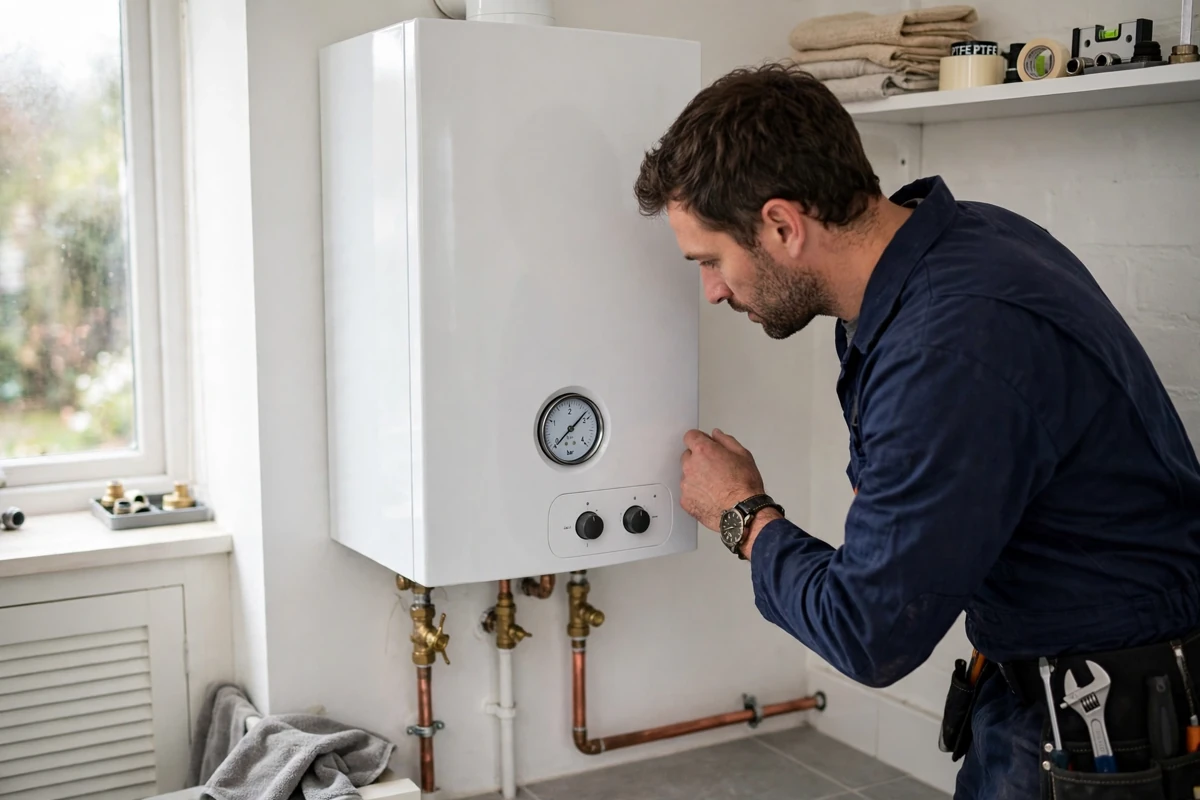
You noticed the heating was getting weak, so you opened the filling loop and topped up the water. Now the gauge shows a number well above where it should be. Is the boiler about to fail? And what should you do to bring the pressure back?
Boiler pressure that is too high is usually a small problem that has a simple cause, most often a filling loop left open for too long. It still needs attention, because pressure that stays high can trigger the safety valve and cause leaks.
 What boiler pressure should look like
Most sealed heating systems show a pressure between 1 and 1.5 bar when the system is cold. When the heating is on, the water expands and the needle can rise to around 2 bar. That is normal.
Your boiler manual gives the exact range for your model. Treat the manual as the rule, because systems differ. If the gauge sits above 2.5 bar when cold, or the needle climbs steadily past 3 bar when hot, the system is over-pressurised.
Say you topped up to 1.2 bar and left the loop open while you made tea. The needle may have moved to 2.8 bar without you seeing it. This is the most common route to a high reading.
Why pressure goes too high
There are four common causes.
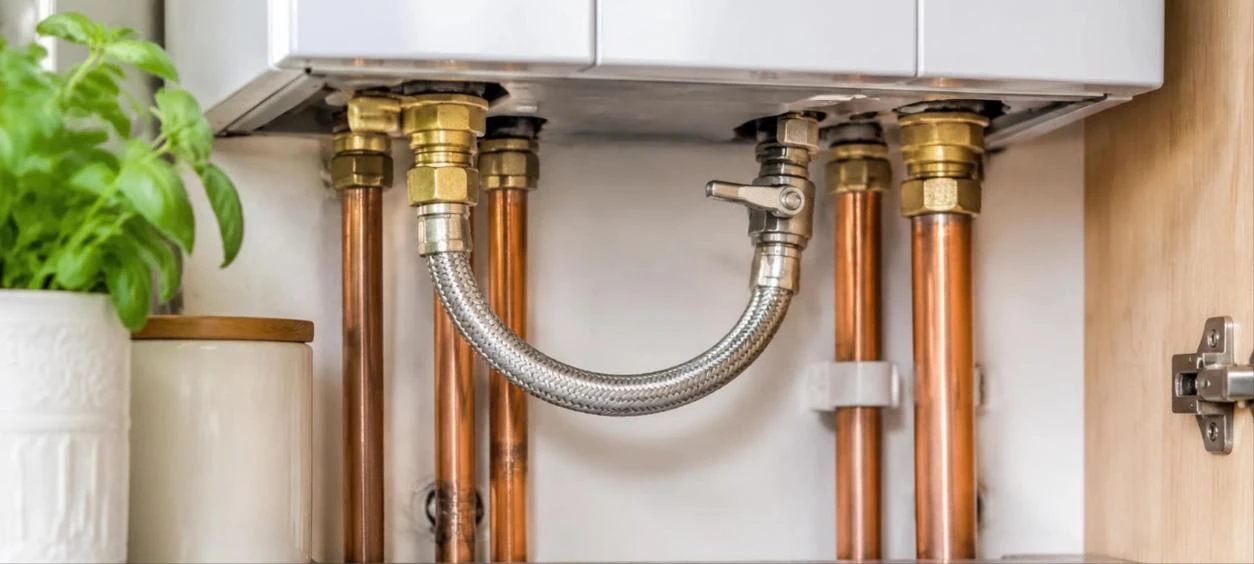
- The filling loop was left open or was not closed fully.
- A faulty filling loop lets mains water in slowly.
- The expansion vessel has lost its air charge.
- The pressure relief valve or gauge is faulty.
The first is a user error and easy to put right. The second and third need an engineer. A pressure that creeps up over several days without any topping up points to the filling loop or the expansion vessel.
Why a little expansion is normal
Water expands when it is heated. In a sealed system, the extra volume has nowhere to go except into the expansion vessel, a small tank with a rubber diaphragm and a cushion of air. When the water cools, the vessel pushes it back, and the needle drops.
Suppose the gauge reads 1.2 bar cold and 1.9 bar hot. That swing of 0.7 bar is the vessel doing its job. If the same boiler shows 1.2 bar cold and 3 bar hot, the vessel is no longer absorbing the expansion, and an engineer should check the air charge.
How to lower the pressure safely
Switch the heating off and let the system cool first. Hot water reads higher on the gauge, so a reading taken on a hot system can mislead you.
Check that both ends of the filling loop are closed. Then release a small amount of water through a radiator bleed valve. Hold a cloth and a container under it, open the valve for a few seconds and watch the gauge. Stop when the needle reaches the cold range in your manual.
Go slowly. Small releases of a few seconds are better than one long one, because dropping the pressure too far means you have to top up again. For more help with heating and plumbing problems in London, see https://oliasplumbingandheating.co.uk/.
When to stop and call an engineer
Do not keep releasing water if the pressure rises again within a day. A needle that keeps climbing means something is feeding the system. That could be a loop that leaks through, or a vessel that has lost its charge.
Call a Gas Safe registered engineer if you see any of these:
- Water dripping from the pressure relief pipe outside the home.
- The boiler shuts down and shows a pressure fault.
- The gauge goes above 3 bar when the heating is on.
- You hear loud banging or knocking from the pipes.
A relief pipe that drips is the safety valve doing its job. Do not block it or cap it. It exists to protect the system from damage.
What you should not do
Do not open sealed parts of the boiler. Do not remove panels to look for the cause. Do not release water from the boiler’s own drain point unless the manual tells you to. Gas appliances contain parts that only a registered engineer should handle.
Do not ignore a high reading either. Over time, pressure above the design range strains joints and seals and can shorten the life of the boiler.
Prevent the problem next time
Topping up is a short job that deserves your full attention. Open the loop slowly, watch the gauge and close both valves before you walk away. Set a timer on your phone if you tend to get distracted.
Check the gauge once a month during the heating season. Write the normal cold reading on a sticker near the boiler, so anyone in the household can compare it. If pressure drops every few weeks, there may be a slow leak somewhere, and that is a different problem from the one in this article.
A pressure that stays within range means the boiler can do its job quietly, and you can stop thinking about it.
