

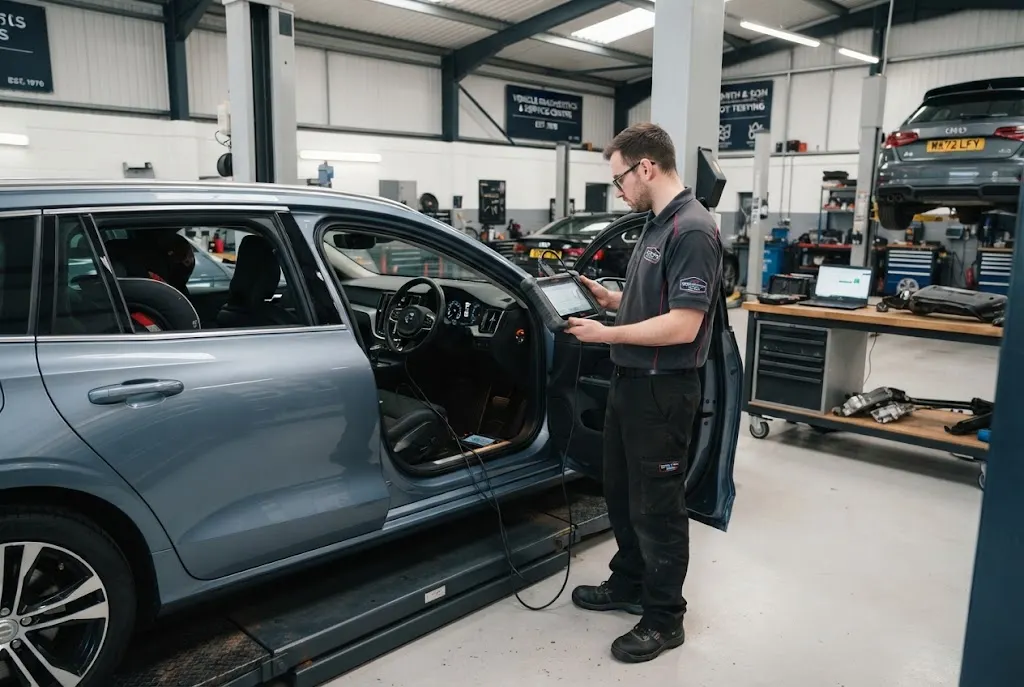
For family vehicles, this approach is particularly useful because warning lights, unusual engine behaviour and hidden maintenance issues can affect reliability and safety. A structured diagnostic inspection can provide a clearer picture of what needs attention now, what should be monitored and which routine maintenance tasks may be approaching.
What Are Auto Inspection Services?
Auto inspection services involve checking a vehicle’s condition using a combination of physical inspection and, where appropriate, diagnostic equipment. The exact process varies according to the vehicle, inspection purpose and garage.
A basic inspection may examine visible components, fluid levels, tyres, brakes, lights and other safety-related areas. A more detailed inspection can include electronic testing of vehicle systems and an assessment of stored fault codes.
The goal is not simply to identify something that is wrong. A useful inspection should help explain the condition of the vehicle and give the owner practical information about maintenance or repairs that may be required.
How Vehicle Diagnostics Work
Vehicle diagnostics use the car’s onboard electronic systems to help identify faults recorded by the vehicle’s computers. A diagnostic scanner can communicate with relevant control modules and retrieve information that may assist a technician in investigating a problem.
This can be especially useful when a vehicle develops a warning light or an intermittent fault. However, a diagnostic code does not always identify the failed component by itself. It is normally a starting point for further testing and professional interpretation.
A technician may combine diagnostic information with physical inspections, live data and other tests before recommending a repair.
When Engine Diagnostics May Be Needed
Engine diagnostics can be useful when a vehicle develops symptoms such as rough running, reduced performance, starting difficulties, unusual fuel consumption or a dashboard warning.
Modern engines rely on numerous sensors and electronic control systems. A problem with one component can sometimes produce symptoms elsewhere in the system. Diagnostic equipment can help narrow down potential causes, reducing the need to rely entirely on guesswork.
Even when the engine appears to be running normally, a diagnostic inspection may reveal stored fault information that deserves further investigation. Whether action is required immediately depends on the specific fault and the technician’s findings.
Warning Light Diagnostics Explained
Warning light diagnostics are particularly valuable when a dashboard light appears unexpectedly. Different warning lights can indicate very different levels of concern, so drivers should refer to the vehicle manufacturer’s guidance and seek appropriate professional advice.
A diagnostic scan can identify relevant stored codes, but the scan itself should not be treated as a complete diagnosis. For example, a sensor-related code may require additional testing to establish whether the sensor itself is faulty or whether another issue is causing the reading.
If a warning light is accompanied by severe symptoms such as loss of power, smoke, overheating or unusual mechanical noises, continuing to drive may not be appropriate. The safest response depends on the circumstances and the vehicle manufacturer’s instructions.
What a Diagnostic Inspection Can Check
A diagnostic inspection can cover different systems depending on the vehicle and equipment available. Common areas may include:
- Engine management systems
- Transmission and gearbox electronics
- Airbag and restraint systems
- Anti-lock braking and stability systems
- Battery and charging systems
- Electronic sensors and control modules
- Stored diagnostic trouble codes
Not every inspection checks every system. Before booking, it is sensible to ask the garage what the inspection includes and whether you will receive a written report of the findings.
Vehicle Health Checks for Families
Vehicle health checks can be useful for families who depend on one car for commuting, school runs, shopping and longer journeys. A health check provides an opportunity to identify maintenance needs before they become urgent.
Depending on the service, the technician may assess tyres, brakes, lights, fluid levels, battery condition and other visible components alongside electronic systems. This broader approach can be more useful than focusing on a single warning or symptom.
For drivers planning a long journey, a health check can also form part of wider seasonal vehicle maintenance and travel preparation.
Digital Diagnostics and Modern Vehicles
Modern vehicles contain increasingly sophisticated electronic systems. As a result, digital diagnostics have become an important part of many professional inspections.
Diagnostic equipment can provide access to information that would not be visible during a simple visual inspection. Depending on the vehicle, technicians may be able to review fault codes, sensor readings and other system information.
However, technology works best when combined with skilled interpretation. A scanner can provide information, but understanding what that information means requires knowledge of the vehicle and the symptoms being experienced.
Why Safety Reports Can Be Useful
A written safety report can make vehicle maintenance easier to manage because it gives the owner a record of what was inspected and what was identified.
Rather than relying on memory, drivers can use the report to distinguish between issues requiring immediate attention and items that should be monitored. This can be particularly helpful for families managing a household vehicle alongside other expenses.
If a vehicle requires repairs, retaining inspection information can also help owners understand why particular work has been recommended. Where appropriate, ask the garage to explain the findings in straightforward language.
Maintenance Alerts and Preventive Care
Maintenance alerts can remind drivers that a vehicle is approaching a scheduled service or that a system requires attention. These alerts should not replace regular visual checks or professional servicing.
A vehicle’s service schedule can vary according to its manufacturer, model, age, mileage and usage. Keeping accurate vehicle maintenance records can make it easier to track completed work and plan future servicing.
Drivers should also respond appropriately to new symptoms rather than waiting for the next scheduled service. A new warning light, unusual noise or change in handling may warrant attention sooner.
When Should You Book an Auto Inspection?
There are several situations in which auto inspection services may be useful. These include buying a used vehicle, preparing for a long journey, investigating a warning light or checking a vehicle after an unusual change in performance.
An inspection can also be useful when a vehicle has been sitting unused for an extended period or when several maintenance tasks have been delayed.
For families, scheduling inspections around seasonal driving can provide an organised way to review the vehicle. Before winter, for example, battery condition, tyres, lights and fluid levels may deserve particular attention. Before summer holidays, cooling-system condition and tyre pressures can become important parts of travel preparation.
Auto Inspection Services Before Buying a Used Car
A pre-purchase inspection can provide information that may not be obvious during a short test drive. A vehicle may look clean externally while still having maintenance requirements or electronic faults that deserve investigation.
A professional inspection can review the vehicle’s visible condition and, where included, its diagnostic information. It may also help identify signs that further mechanical assessment is needed.
Buyers should treat an inspection report as evidence about the vehicle’s condition at the time of inspection rather than a guarantee that future problems will not occur.
How to Choose a Diagnostic Inspection
Before booking, ask what systems the garage will inspect, whether diagnostic scanning is included, whether physical checks are performed and whether you will receive a written report.
It is also useful to explain the exact symptoms you have noticed. Details such as when a warning light appears, whether the engine is cold or warm, and whether the problem happens at particular speeds can help a technician investigate more efficiently.
Choose a service that matches the problem rather than paying for tests that are unrelated to your concern. If you are unsure, explain the symptoms first and ask the garage which inspection would be appropriate.
Auto Inspection Services and Ongoing Family Vehicle Care
An inspection is most useful when it forms part of an ongoing maintenance routine rather than being treated as a one-off solution. Keep service records, follow the manufacturer’s maintenance schedule and address new warning signs promptly.
Combining diagnostic inspections with routine servicing, tyre checks and seasonal preparation can give families a more complete view of their vehicle’s condition. It can also make maintenance easier to plan instead of waiting for unexpected faults to interrupt everyday travel.
For urgent faults, a diagnostic inspection may need to be combined with emergency auto repair or roadside assistance, depending on the vehicle’s condition.
Frequently Asked Questions About Auto Inspection Services
What are auto inspection services?
Auto inspection services involve assessing a vehicle’s condition through physical checks, diagnostic testing or both. The exact inspection depends on the vehicle and the service selected.
Can vehicle diagnostics find every problem?
No. Diagnostic equipment can provide valuable electronic information, but not every mechanical or physical problem will generate a diagnostic code. Professional inspection and testing may still be necessary.
Is a warning light always serious?
Warning lights can indicate different types of issues, ranging from conditions requiring prompt attention to faults that may need further investigation. Drivers should follow the vehicle manufacturer’s guidance and seek professional advice where appropriate.
Are vehicle health checks worth having before a long trip?
A health check can help identify maintenance issues before a journey. It may include checks of tyres, brakes, fluids, lights, battery condition and other systems depending on the service.
Should I keep diagnostic reports?
Keeping useful inspection and service records can make it easier to track repairs, maintenance and recurring issues. Digital or paper records can both be useful as long as they are accurate and accessible.
Final Thoughts
Auto inspection services give drivers a practical way to understand vehicle condition through a combination of physical checks and diagnostic information. From engine diagnostics and warning-light investigations to broader vehicle health checks, the right inspection can help identify issues and organise future maintenance.
For family vehicles, the most useful approach is usually proactive rather than reactive. Keep service records, follow the recommended maintenance schedule and investigate meaningful changes in vehicle behaviour. Combined with seasonal care and routine servicing, professional inspections can support safer, more predictable and better-planned vehicle ownership.
