

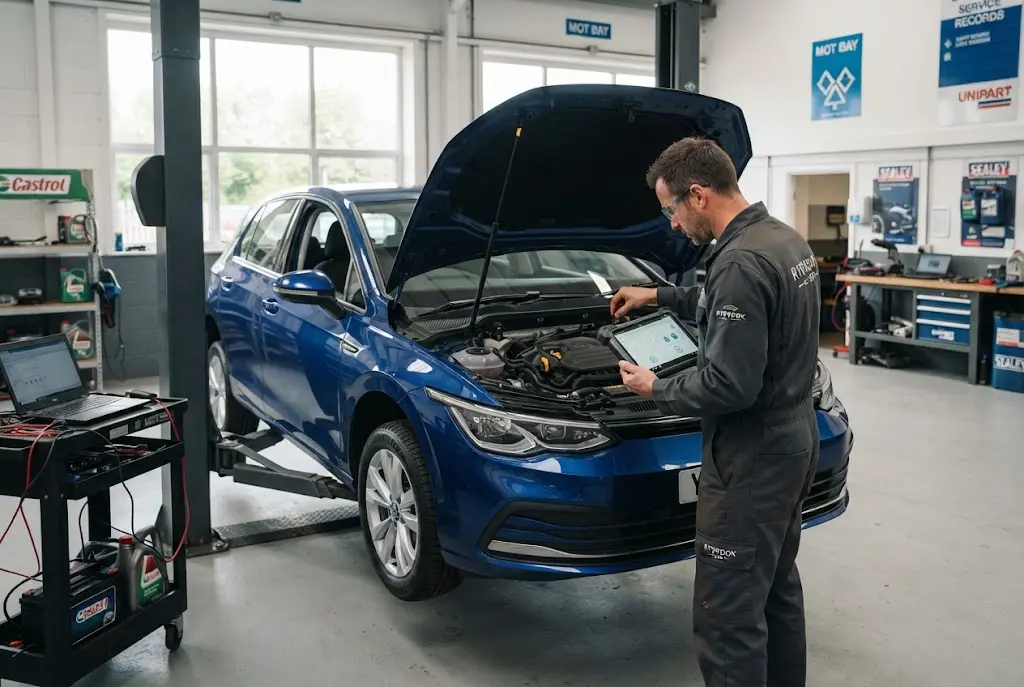
A useful maintenance routine is about more than booking a service when the dashboard reminds you. Drivers can also keep accurate service history, retain maintenance records, monitor tyres and fluids, follow the manufacturer’s schedule and respond promptly when the vehicle develops a new symptom.
Good record keeping can make vehicle ownership more straightforward because it provides a clear history of what has already been completed and what may need attention next.
What Does Vehicle Maintenance Include?
Vehicle maintenance covers a wide range of routine inspections, servicing tasks and repairs designed to keep a car operating as intended. The exact requirements depend on the vehicle, its age, mileage, manufacturer recommendations and how it is used.
Routine maintenance may include servicing, oil and fluid checks, tyre inspections, brake checks, battery assessments, filter replacement and other manufacturer-specified work. Some components require inspection at particular mileage or time intervals, while others should be checked when symptoms appear.
The manufacturer’s handbook and service schedule should be treated as the primary reference for the vehicle’s specific maintenance requirements.
Why Service History Matters
A clear service history provides a record of the maintenance and servicing carried out on a vehicle. It can help the current owner understand what work has already been completed and identify upcoming maintenance requirements.
Service history can become particularly useful when ownership changes. A well-organised record gives a prospective owner more information about the vehicle’s previous maintenance rather than leaving them dependent on memory or incomplete paperwork.
For an existing owner, the benefit is practical. Knowing when a service, repair or component replacement took place makes it easier to plan the next stage of maintenance.
Keeping Accurate Maintenance Records
Maintenance records should contain enough information to establish what work was performed and when. Depending on the vehicle and service provider, records may include service dates, mileage, replaced components, repair details and invoices.
Keep receipts and relevant documents together rather than relying on informal notes. If more than one person uses the family vehicle, a shared digital record can make the information easier to access.
Digital storage can also reduce the risk of losing paper documents. However, the most important consideration is accuracy and consistency rather than whether records are stored electronically or physically.
Digital Service History for Modern Vehicles
A digital service history can provide a convenient way to store and access vehicle maintenance information. Some manufacturers and service networks use electronic systems to record servicing, while independent garages may provide digital invoices or maintenance documentation.
Drivers should understand where their vehicle’s official service information is stored and retain copies of important documents where appropriate. Digital records can be particularly useful when several family members share responsibility for the vehicle.
When buying a used vehicle, ask what service documentation is available and whether the recorded history can be verified through the relevant manufacturer or service provider.
Following a Maintenance Schedule
A maintenance schedule provides a structured guide to servicing and component checks. It may specify requirements based on mileage, time or both.
Following the manufacturer’s schedule can help ensure important maintenance tasks are not forgotten. However, scheduled servicing does not mean drivers should ignore symptoms between service intervals.
A new warning light, unusual noise, vibration, fluid leak or change in handling should be investigated when it appears. Waiting for the next scheduled service may not be appropriate if the vehicle is showing signs of a developing fault.
Routine Servicing and Family Vehicles
Routine servicing is an important part of keeping a family vehicle maintained. A service can provide an opportunity for a professional to inspect relevant systems and complete manufacturer-specified maintenance.
The exact work varies according to the vehicle and service type. Drivers should ask the garage what is included and whether additional repairs have been identified.
Routine servicing should also work alongside practical checks between appointments. Tyre pressures, visible tyre condition, lights and fluid levels can be monitored regularly according to the vehicle manufacturer’s guidance.
Using Service Reminders Effectively
Service reminders can help drivers keep track of upcoming maintenance. Many modern vehicles provide dashboard notifications, while drivers can also use digital calendars, apps or other reminder systems.
A reminder is most useful when it is linked to an accurate record. Once maintenance has been completed, update the record with the date, mileage and work performed so the next reminder can be planned correctly.
Families sharing a vehicle can benefit from a simple system that makes upcoming servicing visible to everyone who drives the car.
Vehicle Maintenance Between Services
Servicing is only one part of ongoing vehicle care. Between scheduled appointments, drivers should remain alert to changes in how the vehicle looks, sounds and feels.
Regularly check tyre pressures using the manufacturer’s recommended figures and inspect tyres for visible damage or unusual wear. If the vehicle develops pulling or uneven tyre wear, wheel alignment may need to be investigated alongside other possible causes.
Seasonal preparation can also help identify issues associated with changing weather. A structured seasonal vehicle maintenance routine can cover areas such as battery condition, tyres, lights and cooling-system checks.
Using a Vehicle Ownership Checklist
A simple ownership checklist can help turn vehicle care into a repeatable routine. Rather than trying to remember every task, owners can keep a list covering maintenance, documentation and basic checks.
A practical checklist might include:
- Next scheduled service date or mileage
- Recent servicing and repairs
- Tyre pressure and condition
- Brake-related observations
- Battery condition or recent replacement
- Fluid checks and top-ups
- Dashboard warning lights
- MOT-related information
- Insurance and vehicle documents
- Upcoming maintenance tasks
The checklist should be adapted to the vehicle rather than treated as a universal servicing schedule.
What to Do When a Warning Appears
Vehicle owners should not rely on maintenance records alone. A warning light or sudden change in vehicle behaviour can require attention even if the next service is months away.
For electronic faults, auto inspection services can help investigate warning lights and other diagnostic concerns. A diagnostic scan may provide useful fault information, although additional testing may be required to identify the underlying cause.
For more serious problems, particularly when a vehicle becomes unsafe to drive, emergency auto repair or vehicle recovery may be appropriate.
Vehicle Maintenance When Preparing for Long Journeys
Long journeys are a useful opportunity to review the vehicle before departure. This does not mean every journey requires a full professional inspection, but important checks should not be overlooked when travelling significant distances.
Review tyre pressures, visible tyre condition, lights, fluid levels, battery performance and any symptoms that have appeared recently. If the vehicle is due for a service, arrange it before travelling where practical.
Families can also keep important maintenance and recovery information accessible during trips. This can make it easier to respond if an unexpected problem occurs away from home.
How Good Records Can Support Used-Car Ownership
Maintenance documentation becomes especially useful when a vehicle is sold. A clear record can show when services and repairs took place and provide useful information about how the vehicle has been maintained.
For buyers, service records should be considered alongside the vehicle’s physical condition, mileage, MOT history and independent inspection where appropriate. Records are valuable evidence, but they do not guarantee that a vehicle will remain fault-free.
For sellers, keeping invoices and service information organised can make it easier to explain the vehicle’s history accurately.
Creating a Simple Family Maintenance System
Vehicle care does not need to become complicated. A simple system can combine the manufacturer’s maintenance schedule with reminders and a central record of completed work.
Choose one place to store invoices and service information. Record the date and mileage after each service or repair. Add reminders for future maintenance and make sure other household drivers know where the information is kept.
This approach can reduce the chance of duplicated work, forgotten servicing or uncertainty about when a component was last replaced.
Frequently Asked Questions About Vehicle Maintenance
How often should vehicle maintenance be carried out?
Maintenance intervals vary by vehicle. Follow the manufacturer’s recommended schedule for servicing and component checks, while carrying out appropriate basic checks between services.
Why should I keep a service history?
A service history helps you understand what maintenance has been completed and when. It can also provide useful documentation when the vehicle is sold.
Are digital service records useful?
Yes. Digital service records can make maintenance information easier to store and access, particularly for families sharing a vehicle. Keep important supporting documents where appropriate.
Can service reminders replace a maintenance schedule?
No. Reminders are a useful organisational tool, but the manufacturer’s maintenance schedule remains the important reference for the vehicle’s servicing requirements.
Should I wait until my next service if the car develops a problem?
Not necessarily. New warning lights, unusual noises, fluid leaks, vibration, steering changes or other significant symptoms should be assessed promptly rather than automatically waiting for the next scheduled service.
Final Thoughts
Vehicle maintenance becomes much easier to manage when servicing, repairs, inspections and reminders are organised into a clear system. Keeping an accurate service history and maintenance records provides a useful reference for both current ownership and future vehicle decisions.
Follow the manufacturer’s maintenance schedule, use reminders to avoid missed servicing and monitor the vehicle between appointments. Combining routine servicing with seasonal checks, tyre care and prompt investigation of warning signs can help families maintain a more reliable and well-documented vehicle throughout its ownership.
