

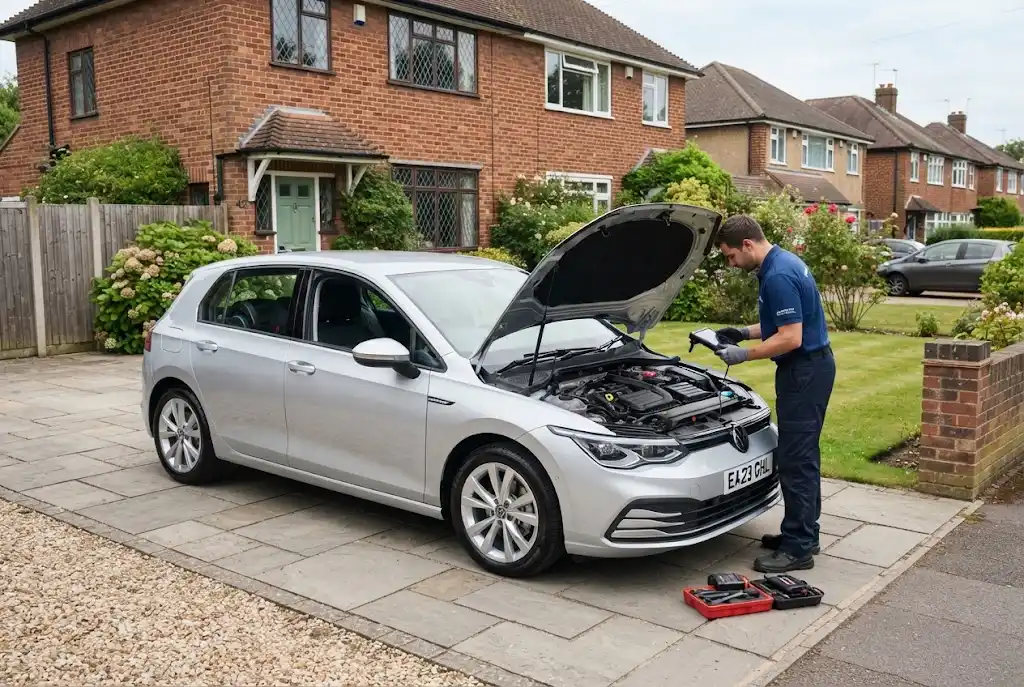
Car servicing is an important part of keeping a family vehicle safe, dependable and ready for everyday journeys. Whether the car is used for school runs, commuting, shopping or longer trips, regular maintenance can help identify developing problems before they become more disruptive.
For UK families, looking after a vehicle involves more than waiting for the annual MOT. An MOT is a legal safety and environmental test, but it does not replace routine servicing or the checks recommended by the vehicle manufacturer. The GOV.UK guidance also makes clear that a vehicle can be unsafe to drive even when it has a current MOT certificate. Checking that your vehicle is safe to drive should therefore remain part of responsible car ownership.
A sensible approach combines the manufacturer’s maintenance schedule with regular servicing, basic checks between appointments and prompt attention to warning signs. This makes vehicle care easier to manage and can give families greater confidence when relying on one car for multiple daily responsibilities.
Why Car Servicing Matters for Family Vehicles
Family cars often experience varied driving conditions. Short school runs, stop-start traffic, motorway journeys, shopping trips and holiday travel can all place different demands on a vehicle. Even when a car appears to be running normally, routine servicing provides an opportunity to assess components and complete maintenance specified for its age, mileage and model.
Regular servicing can also help establish a clear maintenance history. When you know when the oil and filters were changed, which components have been inspected and what work has already been completed, it becomes easier to plan future maintenance rather than relying on memory.
Good records are particularly useful when more than one person drives the same car. A shared maintenance record can help prevent missed appointments and make it easier to understand what needs attention next. SayNest’s guide to vehicle maintenance, service history and schedules provides further context on organising records and following a structured maintenance routine.
Understanding Routine Servicing and Service Intervals
Routine servicing is not necessarily identical for every vehicle. The correct interval depends on factors such as the manufacturer’s recommendations, vehicle age, mileage, engine type and driving conditions.
The vehicle handbook or manufacturer’s service schedule should be the main reference for determining when maintenance is due. Some vehicles have service requirements based primarily on mileage, while others use time-based intervals or a combination of both.
Modern vehicles may also display service reminders on the dashboard. These alerts are useful, but they should be treated as part of a wider maintenance system rather than a replacement for reading the manufacturer’s guidance.
Once a service has been completed, record the date, mileage and work carried out. Keeping invoices and other relevant documentation together can make future servicing decisions much easier.
Annual Service, Interim Service or Full Service?
Drivers may come across different service names when comparing garages. Terms such as annual service, interim service and full service can vary between providers, so it is important to check exactly what is included rather than choosing solely based on the label.
Annual Service
An annual service is generally associated with maintaining a vehicle on a yearly basis, although the exact checks and replacement items depend on the car and the garage’s service package. The manufacturer’s schedule should always take priority when determining what maintenance is required.
Interim Service
An interim service may be appropriate for vehicles that cover high mileages or are used particularly frequently, depending on the manufacturer’s recommendations. It can provide an additional maintenance checkpoint between more comprehensive scheduled services.
Full Service
A full service generally covers a broader range of inspections and maintenance tasks than a basic service. However, there is no single universal definition of a “full service”, so motorists should ask for a clear breakdown of the work before booking.
Major Service
A major service is typically associated with more extensive scheduled maintenance. Depending on the vehicle, this may involve additional filters, component inspections or replacement items specified by the manufacturer.
The key point is simple: compare the actual service schedule and included work rather than assuming that two garages offering the same service name provide exactly the same package.
Car Servicing and the MOT Are Not the Same
One of the most important points for family car owners is understanding the difference between servicing and an MOT.
An MOT checks whether a vehicle meets specific road safety and environmental standards at the time of the test. GOV.UK guidance explains that the MOT covers areas including brakes, steering, visibility, lighting, tyres, suspension, seat belts and emissions. It does not, however, provide a general assessment of every mechanical component or replace a manufacturer’s servicing schedule. The official MOT guidance explains what the test does and does not cover.
Servicing has a different purpose. It follows the vehicle’s maintenance requirements and can include scheduled replacement and inspection work that falls outside the scope of the MOT.
For that reason, a family car can have a valid MOT while still being due for servicing or requiring attention to a mechanical issue.
What Should You Check Between Services?
Professional servicing is only one part of responsible vehicle ownership. Drivers should also remain alert to changes between appointments.
Basic checks can include:
- Tyre pressure and visible tyre condition
- Lights, indicators and brake lights
- Engine oil and other relevant fluid levels
- Windscreen washer fluid
- Visible signs of leaks
- Unusual noises or vibrations
- Changes in steering or braking behaviour
- Dashboard warning lights
GOV.UK recommends regular attention to items such as tyres, fluids, lights and brakes, while the Highway Code advises drivers to follow the vehicle manufacturer’s specifications for tyre pressures and maintenance. The Highway Code’s vehicle maintenance guidance is a useful reference for UK motorists.
These checks do not replace professional servicing. Instead, they help drivers notice changes between scheduled appointments.
Warning Signs That Should Not Wait for the Next Service
A service reminder does not mean you should ignore a problem until the scheduled appointment. If the car develops a new warning light, unusual vibration, fluid leak, braking problem, steering issue or significant change in performance, it may need attention sooner.
For example, a vehicle pulling to one side, producing unusual brake noises or developing uneven tyre wear could indicate an issue that requires professional inspection. Similarly, repeated difficulty starting the car should not automatically be dismissed as an ageing battery without checking the wider electrical and charging system.
For more detailed checks, an auto inspection and diagnostic service can help investigate warning lights, vehicle symptoms and broader maintenance concerns.
How to Build a Family Car Maintenance Schedule
A simple maintenance schedule can make vehicle ownership much easier for busy households. Instead of trying to remember every service date or repair, keep one central record containing the vehicle’s maintenance information.
Record the following after each appointment:
- Date of the service or repair
- Vehicle mileage
- Work completed
- Parts or fluids replaced
- Recommendations from the garage
- Next scheduled service or maintenance requirement
It is also useful to set service reminders based on both date and mileage where appropriate. If several family members use the vehicle, everyone should know where the information is stored.
This approach can reduce the risk of forgotten maintenance and make conversations with a garage more straightforward.
Choosing a Garage for Family Car Servicing
The quality and suitability of the garage matter just as much as remembering to book a service. Before making an appointment, check that the workshop has experience with your vehicle type and can carry out the maintenance required by the manufacturer.
It is also worth asking what is included in the quoted service, whether additional work requires approval and whether you will receive documentation showing what was completed.
For motorists comparing independent workshops and larger networks, SayNest’s garage comparison guide covers factors such as available services, workshop expertise, pricing considerations and customer feedback.
Do not choose a garage solely because it offers the lowest headline price. A clear explanation of the work, appropriate equipment and transparent communication can be more valuable over the life of a family vehicle.
Preparing Your Family Car for Long Journeys
Long journeys are a good opportunity to review the vehicle before departure, particularly when travelling with children, luggage or passengers who rely on the car throughout the trip.
Check tyre pressures according to the manufacturer’s recommendations, inspect the visible condition of the tyres, confirm that the lights work and look for any dashboard warnings. Check relevant fluid levels and pay attention to any unusual noises or handling changes that have appeared recently.
If the vehicle is already approaching its scheduled service, arranging maintenance before a long journey can be sensible. Seasonal preparation can also be useful when a family car will be exposed to changing weather or extended motorway driving.
For additional guidance, see SayNest’s article on seasonal vehicle maintenance, which covers practical checks for changing conditions throughout the year.
Keeping Service Records Organised
A well-maintained service history can benefit both current ownership and future resale. Keep invoices, service documentation and records of significant repairs together so there is a clear history of the vehicle’s maintenance.
Digital storage can be particularly convenient for families. A shared folder, maintenance app or other organised system can make documents easier to find when booking a service, discussing previous repairs or preparing to sell the vehicle.
Service records should support, not replace, professional judgement. If the car develops a new symptom, the correct response is to have the problem assessed rather than assuming that recent servicing guarantees the vehicle is free from faults.
Car Servicing: A Practical Routine for Families
Keeping a family car roadworthy does not require an unnecessarily complicated system. The most effective approach is consistent: follow the manufacturer’s maintenance schedule, keep service records, respond to service reminders and carry out sensible checks between appointments.
Remember that an MOT and servicing have different purposes. The MOT confirms compliance with specific legal standards at the time of testing, while servicing helps maintain the vehicle according to its maintenance requirements. Both can form part of a wider approach to responsible vehicle ownership.
When a warning light, unusual noise, braking concern, steering change or other significant symptom appears, do not simply wait for the next routine appointment. Prompt professional assessment can help identify what needs attention and whether the vehicle remains suitable for continued use.
Frequently Asked Questions About Car Servicing
How often should a family car be serviced?
There is no single interval that applies to every vehicle. Follow the manufacturer’s recommended schedule, which may be based on time, mileage or both. Your vehicle handbook is the best starting point.
Is an MOT the same as a car service?
No. An MOT checks specific legal safety and environmental requirements, while servicing follows the vehicle’s maintenance requirements. A car can have a valid MOT and still be due for a service.
What is included in a full service?
The contents vary between garages and vehicles. Ask the provider for an itemised list of checks, replacement items and inspections included in the package before booking.
Should I service my car every year?
Many vehicles have time-based servicing requirements, but the correct interval depends on the manufacturer and model. Check the vehicle’s maintenance schedule rather than relying on a universal rule.
Can I wait until my next service if a warning light appears?
Not necessarily. A new warning light or significant change in vehicle behaviour may require earlier investigation. If the vehicle appears unsafe to drive, do not continue driving it simply because a service is not yet due.
Final Thoughts
Regular car servicing is one of the simplest ways for families to stay organised about vehicle maintenance. It provides an opportunity to complete scheduled work, maintain useful records and identify issues that may otherwise become more disruptive.
Combine servicing with sensible checks between appointments, a clear maintenance schedule and prompt action when something changes. By treating vehicle care as an ongoing responsibility rather than an annual task, families can make everyday motoring more predictable and keep their cars better prepared for the journeys ahead.
