

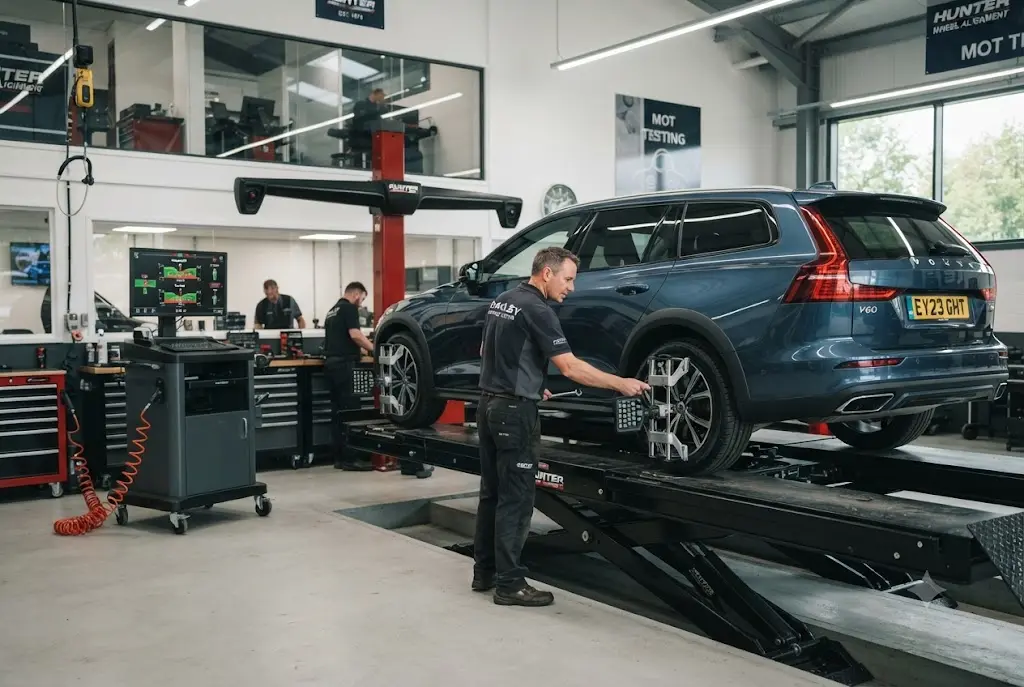
Wheel alignment is an important part of maintaining safe, predictable handling and even tyre wear. When a vehicle’s wheels are not correctly aligned, you may notice the car pulling to one side, an off-centre steering wheel or unusual wear across the tyres. These symptoms should not simply be ignored, particularly when the car is used regularly for family journeys.
UK roads can expose vehicles to potholes, kerbs and uneven surfaces, all of which can contribute to alignment problems. A minor change in wheel geometry may not immediately make the car undriveable, but it can affect handling and accelerate tyre wear over time.
This guide explains what wheel alignment means, how it differs from wheel balancing and tracking, which warning signs to watch for, what can cause alignment problems and what UK drivers should know about alignment costs.
What Is Wheel Alignment?
Wheel alignment is the process of checking and, where necessary, adjusting the angles of a vehicle’s wheels so they meet the manufacturer’s specifications.
The objective is to ensure that the wheels point and sit correctly in relation to the vehicle and the road. Correct alignment helps the vehicle travel predictably, supports even tyre wear and can contribute to stable handling.
Several geometric measurements can be involved, including toe, camber and caster. The exact adjustment possibilities depend on the vehicle’s suspension design.
Toe
Toe describes the direction the wheels point when viewed from above. If the front edges of the tyres point slightly towards each other, this is generally described as toe-in. If they point away from each other, it is toe-out.
Incorrect toe settings can contribute to uneven tyre wear and changes in steering behaviour.
Camber
Camber describes the inward or outward tilt of the wheel when viewed from the front of the vehicle. Excessive or incorrect camber can cause a tyre to wear more heavily on one side.
Caster
Caster relates to the angle of the steering axis when viewed from the side. It contributes to steering stability and the way the steering returns after a turn.
Not every vehicle allows all three angles to be adjusted directly. A qualified technician should therefore assess the vehicle against the manufacturer’s specifications.
Wheel Alignment vs Wheel Balancing
Wheel balancing and alignment are different services, even though both can affect how a car feels on the road.
The Wheel balancing concerns the distribution of weight around a wheel and tyre assembly. If the assembly is out of balance, you may experience vibration, particularly at certain speeds.
Alignment concerns the geometric relationship and angles of the wheels. Misalignment is more commonly associated with symptoms such as pulling to one side, an off-centre steering wheel and uneven tyre wear.
A vehicle can therefore have correctly aligned wheels but still require balancing, or it can have balanced wheels while its alignment is incorrect.
If you are experiencing vibrations, steering changes or tyre problems, a garage should diagnose the cause rather than automatically assuming that one particular service is required.
What Is Wheel Tracking?
Wheel tracking is a term commonly used for wheel alignment, particularly when referring to adjustments involving the direction of the wheels.
Drivers may therefore see services described as tracking, four-wheel alignment, steering alignment or wheel alignment. The exact service offered can differ between garages.
When booking, ask what the workshop means by its alignment or tracking service and whether it will measure all relevant wheels or only the front axle.
For some vehicles, checking the rear wheels can be important because the relationship between the front and rear axle affects the vehicle’s overall geometry.
Signs You May Need Wheel Alignment
Misalignment does not always produce an obvious warning. However, several symptoms can indicate that an inspection is worthwhile.
Your Car Pulls to One Side
If the vehicle consistently drifts or pulls left or right when travelling on a suitable, reasonably level road, alignment may be one possible cause.
However, tyre pressure, road camber, braking faults and suspension problems can also influence the way a car tracks. A proper inspection is therefore important before assuming alignment is responsible.
The Steering Wheel Is Off-Centre
If the vehicle travels straight but the steering wheel sits noticeably to one side, this can indicate an alignment issue.
An off-centre steering wheel can also develop after suspension or steering work, so tell the technician about any recent repairs when booking an inspection.
Uneven Tyre Wear
Uneven tyre wear is one of the most useful visual clues.
Inspect the tyres regularly and look for differences between the inner and outer edges or unusual tread patterns. Misalignment can contribute to irregular wear, but incorrect tyre pressure, worn suspension components, balancing problems and driving conditions can also play a role.
RAC guidance notes that misaligned wheels can lead to uneven tyre wear and compromised handling, while also identifying incorrect tyre pressure, unbalanced tyres and suspension problems as other possible causes of abnormal wear.
Steering Feels Different
If the steering feels unusually heavy, loose or inconsistent, do not automatically book an alignment without having the underlying problem checked.
Steering and suspension faults can create symptoms that resemble alignment problems. A good workshop should inspect the relevant components before making adjustments.
Recent Pothole or Kerb Impact
A significant pothole or kerb impact can affect tyres, wheels, steering or suspension components.
If the vehicle starts pulling to one side or the steering wheel position changes after an impact, arrange an inspection. Alignment may need correcting, but damaged suspension or steering components may also need attention.
Why Correct Alignment Matters for Safer Handling
Correct alignment helps the vehicle behave predictably. When the wheels are not positioned according to the manufacturer’s specifications, the car may not respond as expected during steering manoeuvres.
The UK Highway Code guidance on vehicle maintenance notes that excessive or uneven tyre wear can be associated with faults in braking or suspension systems or wheels that are out of alignment, and advises having such faults corrected.
That does not mean every handling problem is caused by alignment. Instead, alignment should be considered as one part of a wider steering, suspension and tyre assessment.
This is particularly relevant for family vehicles because predictable handling matters during everyday driving as well as longer journeys.
How Alignment Can Affect Tyre Wear
Tyres are designed to make consistent contact with the road. If wheel angles are incorrect, parts of the tread can experience more stress than intended.
Over time, this may produce wear concentrated on one edge or an unusual tread pattern. The faster the wear develops, the greater the possibility of needing replacement tyres earlier than expected.
Maintaining the correct tyre pressure is equally important. RAC guidance recommends following the vehicle manufacturer’s recommended tyre pressures and notes that incorrect pressures can contribute to premature or uneven wear.
For this reason, alignment should not be considered a substitute for basic tyre maintenance. Both need attention.
What Happens During a Wheel Alignment?
A professional alignment normally begins with an inspection of the vehicle and its tyres.
The technician may check for damaged or worn suspension components, tyre condition and other issues that could prevent accurate alignment.
Specialist equipment is then used to measure wheel angles against the appropriate specifications. Depending on the vehicle, adjustments may be made to the relevant suspension or steering components.
After adjustments, measurements should be checked again to confirm the results.
RAC describes a typical process as an initial inspection, measurement of wheel angles, adjustment where possible and a final check.
The exact process varies between vehicles and garages, so ask the workshop what its alignment service includes.
Do You Need Two-Wheel or Four-Wheel Alignment?
The appropriate service depends on the vehicle and the symptoms.
A front-wheel alignment may be suitable for certain vehicles and situations. However, some vehicles require or benefit from measuring all four wheels to assess the complete geometry.
Do not select a service solely because it is cheaper. Ask the garage which alignment procedure is appropriate for your vehicle and why.
If the workshop finds that rear-wheel geometry is outside the required specification, a front-only adjustment may not address the underlying issue.
When Should You Have Wheel Alignment Checked?
There is no universal interval that applies perfectly to every car. Manufacturer recommendations, road conditions, vehicle use and suspension design all matter.
It is sensible to consider an alignment check when you notice symptoms such as pulling, uneven tyre wear or an off-centre steering wheel.
You should also consider having the vehicle inspected after a significant pothole or kerb impact, especially if its handling changes afterwards.
RAC recommends regular alignment checks and advises drivers to have their alignment inspected if they notice symptoms or after hitting a substantial pothole or kerb.
Wheel Alignment Cost in the UK
Wheel alignment cost varies according to the vehicle, garage, location and type of alignment required.
As an example, RAC’s current consumer guidance lists a typical standard alignment range of approximately £75 to £115, while a four-wheel alignment can cost £100 or more. These figures are indicative rather than a universal UK price, and individual garages may charge more or less.
The final cost can also increase if the inspection identifies worn suspension, steering or other components that need repair before the alignment can be completed correctly.
When comparing prices, ask whether the quotation includes measurement, adjustment and a final check. Also ask whether additional repairs would be charged separately.
Is Cheap Wheel Alignment Always Good Value?
Not necessarily.
Alignment is a measurement-based service, so the equipment, technician experience and time spent checking the vehicle can all matter.
A very low price may look attractive, but it is worth confirming what the garage actually provides. A proper service should identify relevant faults and use appropriate specifications rather than simply making a quick adjustment.
If you are comparing garages, our garage comparison guide explains how to assess workshops based on reviews, pricing, technical expertise and service quality.
Wheel Alignment After New Tyres
Fitting new tyres does not automatically mean that the vehicle needs an alignment adjustment, but checking alignment can be sensible when there are signs of misalignment or when the previous tyres showed unusual wear.
New tyres will not correct an underlying geometry problem. If a vehicle is misaligned, replacement tyres could eventually develop the same uneven wear pattern.
RAC recommends considering alignment after new tyres to help ensure even wear and appropriate performance.
Ask the tyre or garage technician to inspect the existing alignment if the old tyres were worn unevenly or the vehicle’s steering has recently changed.
Wheel Alignment and Family Cars
Family vehicles can be particularly exposed to conditions that affect wheels and suspension.
Regular journeys over urban roads, carrying heavier loads for holidays or driving over potholes can all place additional demands on tyres and suspension components.
Before a long family trip, check tyre pressures and inspect the tread and sidewalls. If you notice uneven wear or handling changes, arrange an inspection rather than assuming the vehicle will be fine for the journey.
For families using hybrid or electric vehicles, tyre maintenance is equally important. If your vehicle is a hybrid, our guide to hybrid servicing covers wider maintenance considerations. EV owners can also review our guide to EV servicing for electric-car maintenance information.
Wheel Alignment vs Suspension Problems
It is important not to confuse an alignment setting with a damaged mechanical component.
If a suspension arm, steering component, spring or other part is bent or worn, simply adjusting the alignment may not solve the problem.
A competent garage should therefore inspect the vehicle before making adjustments. If a component is damaged, it may need to be repaired or replaced before accurate alignment can be achieved.
This is particularly important after a major pothole or kerb impact. A sudden impact can affect more than the wheel angles alone.
How Drivers Can Reduce Alignment Problems
Drivers cannot prevent every alignment issue, but sensible vehicle care can reduce avoidable problems.
- Maintain the tyre pressures recommended by the vehicle manufacturer.
- Inspect tyres regularly for uneven wear or visible damage.
- Avoid potholes and kerbs where it is safe and practical to do so.
- Do not ignore changes in steering behaviour.
- Have significant impact damage inspected promptly.
- Keep up with routine servicing and suspension checks.
- Use a reputable workshop for alignment measurements and adjustments.
Correct tyre pressure is particularly important because under- or over-inflation can affect handling and tyre wear independently of alignment. UK road-safety guidance also highlights the importance of maintaining appropriate tyre pressures.
Questions to Ask a Garage About Alignment
Before approving the work, ask a few straightforward questions:
- What evidence suggests the vehicle needs alignment?
- Which wheels will be measured?
- Are the tyres wearing unevenly?
- Could a suspension or steering fault be responsible?
- Will you provide the measurements before and after adjustment?
- Is the quoted price for front or four-wheel alignment?
- Are additional repairs required before alignment?
These questions can help you understand what you are paying for and whether the recommended work addresses the actual problem.
Final Thoughts on Wheel Alignment
Wheel alignment is a relatively straightforward maintenance service, but it can have an important effect on handling, tyre wear and driving confidence.
Drivers should pay attention to warning signs such as an off-centre steering wheel, pulling to one side, unusual tyre wear or changes after hitting a pothole or kerb. However, these symptoms can have several causes, so a professional inspection is preferable to assuming alignment is the problem.
Wheel balancing, tracking and alignment are related terms but describe different aspects of vehicle setup and maintenance. A good garage should identify what your car actually needs before carrying out the work.
For UK families, maintaining tyres and steering components is particularly important because predictable handling forms part of safe everyday motoring. Regular checks, sensible driving and prompt attention to unusual symptoms can help prevent minor problems from becoming more expensive ones.
For official UK guidance on vehicle maintenance and tyre safety, drivers can also consult the Highway Code vehicle maintenance guidance.
