

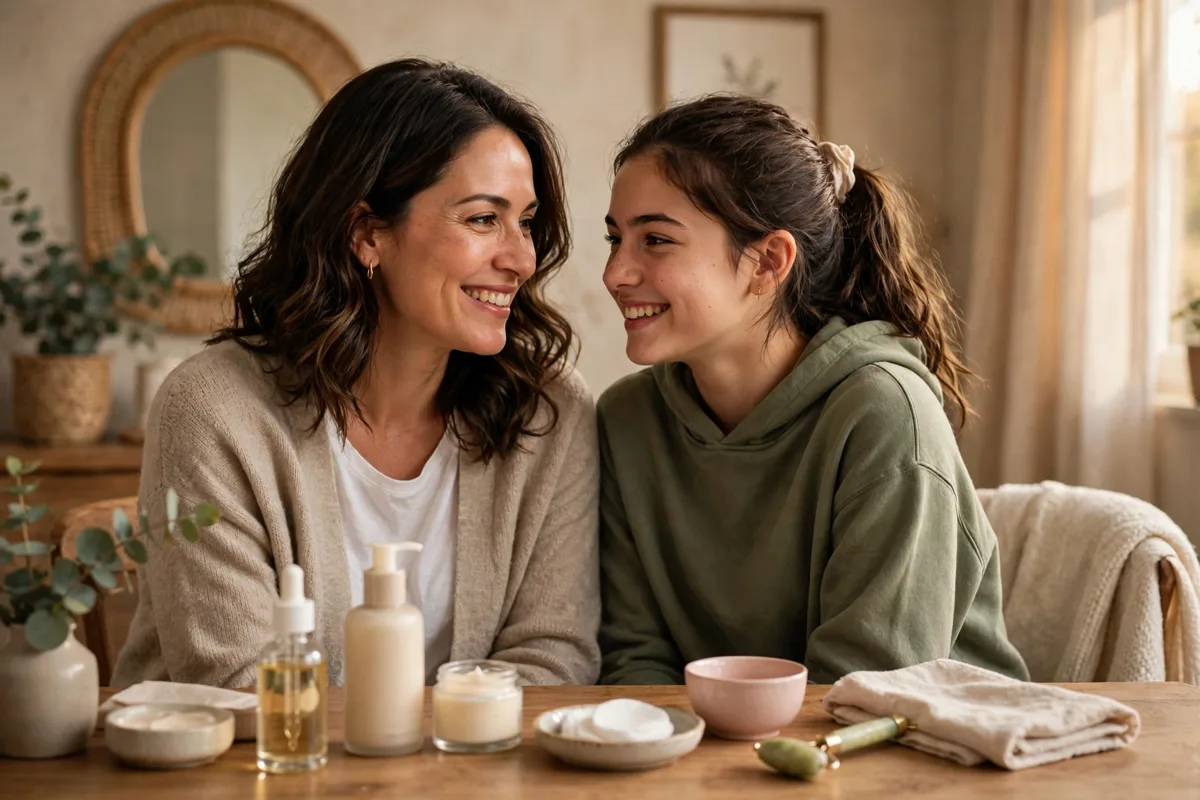
If your teenager has started asking for skincare and makeup, you are not alone. Social media has brought teenage beauty into family life earlier and louder than ever, with children watching multi-step routines performed by influencers twice their age. The good news is that beauty can be a positive, creative part of growing up, as long as it stays simple, safe and age appropriate. This family guide explains what teenage skin actually needs, what it does not, and how parents can guide without turning the bathroom shelf into a battleground.
What Teenage Skin Actually Needs
Teenage skin is going through hormonal changes that increase oil production, which is why breakouts are so common during puberty. But young skin is also resilient and, crucially, does not need anti-ageing ingredients. A teenager’s routine should do three things: clean gently, moisturise lightly and protect from the sun.
That is the whole foundation. Everything else is optional decoration. Families who keep this message clear find it much easier to resist the expensive extras marketed at young people. The principles are similar to the simple steps in our guide to a skincare routine for glowing skin, just stripped back further for younger faces.
A Simple Routine That Works
Morning
A splash of water or a gentle cleanser, a light fragrance-free moisturiser and sunscreen. Choosing the right sunscreen matters because teenagers will only wear one that feels comfortable; our article on how to choose the right sunscreen for your skin type explains textures and finishes that suit oily, young skin.
Evening
One gentle cleanse to remove sunscreen, makeup and the day. If breakouts are a concern, a cleanser or leave-on product with salicylic acid, used a few times a week, is a well-established option for oily, spot-prone skin. Follow with moisturiser. That is enough. If a routine has more steps than a parent can remember, it has too many.
Ingredients and Products to Avoid for Young Skin
Strong anti-ageing actives such as retinoids and high-strength exfoliating acids are formulated for adult skin concerns and can irritate young skin, damaging its barrier and making breakouts worse. Heavily fragranced products and harsh physical scrubs are also poor choices for teenagers, whose skin barrier is still developing.
Be cautious with trend-driven purchases. A product going viral is not evidence that it suits a fourteen-year-old. Checking what established beauty brands in the UK actually recommend for younger skin, and reading the age guidance on packaging, gives a far steadier steer than a trending video.
Makeup: Keeping It Fun and Age Appropriate
Makeup itself is not the enemy. For many teenagers it is creative, social and confidence-building. The family’s role is to set gentle boundaries: lighter products over heavy bases, clean brushes and sponges, no sharing of eye or lip products with friends, and everything removed before bed.
Practical habits help. Patch test new products on the inner arm first. Check expiry dates on mascara and liquid products, which harbour bacteria over time. If your teenager enjoys experimenting, seasonal ideas like the nail art designs we rounded up can feed that creativity with far less risk to facial skin than a drawer of adult treatments. Many families also find that affordable everyday ranges, including the staples in our Beauty Pie products guide, are a sensible middle ground between pocket-money basics and luxury marketing.
Talking About Social Media and Skin Image
The hardest part of teenage beauty today is not the products; it is the comparison. Filters, ring lights and edited skin set standards that no real face can meet. Parents cannot remove social media from the picture, but they can change the conversation around it.
Talk openly about how images are edited and how influencers are paid to promote products. Follow some accounts together and notice the advertising. Encourage your teenager to judge a product by its ingredients and reviews rather than by who is holding it. Our look at beauty trends in the UK shows how quickly fads cycle, which can help teenagers see trends as entertainment rather than instructions.
Confidence Beyond Products
It also helps to widen the definition of looking after yourself. Sleep, sport, fresh air and time with friends do more for a teenager’s appearance, and their confidence, than any product on a shelf. Teenagers who feel good about their lives generally worry less about their skin, and teenagers who worry less about their skin pick at it less, use fewer harsh products and give it the calm it needs to settle.
Parents can model this without lecturing. Compliment effort, humour and kindness more than appearance. Keep your own routine visibly simple. If your teenager sees you wearing sunscreen, removing makeup and otherwise not thinking much about your face, that normality is quietly persuasive. And when they do have a bad skin day before something important, sympathy and a simple plan beat a shopping trip: a gentle cleanse, a spot treatment used sparingly, light makeup if they want it, and a reminder that nobody else is looking at their skin as closely as they are.
When to Seek Professional Advice
Most teenage skin settles with a simple routine and time. See a pharmacist or GP if breakouts are painful, cystic, leaving marks or affecting your teenager’s confidence and mood. Prescription options exist and work well, and getting help early prevents scarring. Sudden rashes, swelling or reactions to a product also deserve prompt advice rather than another new product layered on top.
The Bottom Line for Families
Teenage beauty works best when it is boring in the bathroom and fun everywhere else: gentle cleansing, light moisture, daily sunscreen, a little makeup for enjoyment and honest conversation about what appears on a screen. Keep the routine short, the products age appropriate and the door open for questions. Your teenager’s skin, and their confidence, will be better for it.
