

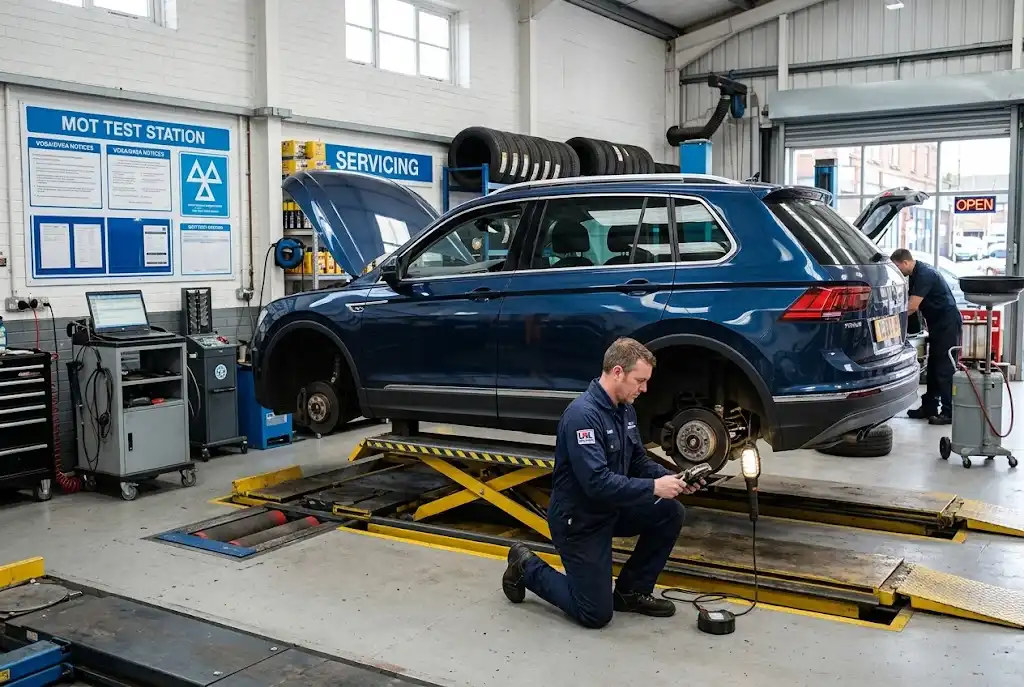
Understanding MOT and service requirements is essential for anyone responsible for a car in the UK. Although an MOT and a vehicle service are often discussed together, they have different purposes. An MOT checks whether a vehicle meets specific legal roadworthiness and environmental standards at the time of the test, while servicing focuses on ongoing maintenance and the condition of the vehicle.
Knowing the difference can help families plan their vehicle care more effectively, avoid missed testing deadlines and understand why passing an MOT does not necessarily mean that a car is fully maintained.
What Is an MOT and Service?
The phrase MOT and service often refers to two separate parts of responsible vehicle ownership. An MOT is a regulated test carried out by an authorised MOT testing station. A service is a programme of maintenance designed to keep the vehicle operating properly.
During an MOT, specific components and systems are assessed against the applicable testing standards. A service can be much broader, depending on the manufacturer’s maintenance schedule and the type of service selected.
This means a car can pass an MOT while still being due for a service. Equally, having a car serviced does not replace the need for an MOT when the vehicle is legally required to have one.
MOT and Service: What Is the Difference?
The easiest way to understand the difference is to consider their main purposes.
- MOT: A regulated test of specified roadworthiness and environmental requirements.
- Service: Planned maintenance intended to help keep the vehicle in good working condition.
An MOT result tells you whether the vehicle met the relevant test requirements at the time it was examined. A service can involve maintenance such as oil and filter replacement, fluid checks and inspections based on the vehicle’s service schedule.
The Driver and Vehicle Standards Agency provides official guidance explaining how MOT testing works and what the test covers. You can check the official MOT information on GOV.UK.
Why You Need Both MOT and Service
For many UK drivers, keeping up with both testing and maintenance is a sensible approach to vehicle ownership. The MOT addresses specific legal requirements, while servicing provides a structured opportunity to maintain the vehicle.
Relying solely on an MOT can leave routine maintenance overlooked. A car may pass its test but still have maintenance requirements that should be addressed according to its manufacturer’s schedule.
Likewise, keeping up with servicing does not remove the legal requirement for an MOT where applicable. Treating the two as complementary rather than interchangeable makes vehicle maintenance easier to manage.
What Happens During an MOT Inspection?
An MOT inspection examines specific items that are relevant to roadworthiness and environmental standards. The tester assesses the vehicle according to the applicable MOT testing requirements.
Areas examined can include items such as lights, tyres, brakes, steering, suspension, body or vehicle structure, visibility and emissions, depending on the vehicle and test requirements.
The test is not intended to provide a complete mechanical health assessment. This is why a successful MOT should not be interpreted as confirmation that every part of the vehicle is in perfect condition.
What Happens During a Car Service?
The work carried out during servicing depends on the service type and the vehicle manufacturer’s maintenance requirements. A garage may inspect several systems and replace scheduled items where necessary.
A service can involve areas such as:
- Engine oil and oil filter.
- Air or other relevant filters.
- Brake components.
- Tyres and tyre condition.
- Fluid levels and condition.
- Steering and suspension components.
- Battery and charging system.
- Lights and other relevant vehicle systems.
The exact checklist varies. Therefore, always ask what is included when booking a service rather than assuming that every garage uses an identical package.
Full Service and MOT
A full service and MOT can be a convenient combination when both are due around the same period. The two jobs should still be understood separately.
The service deals with scheduled maintenance, while the MOT addresses the regulated test requirements. A garage may carry out the service before the MOT so that certain maintenance issues can be identified first, although the order can vary.
If additional repairs are recommended, ask the garage to explain whether they are required for the MOT, recommended for vehicle maintenance or simply advisable because of wear.
Interim Service and MOT
An interim service and MOT may be appropriate for some vehicles when the manufacturer’s maintenance schedule calls for an interim service around the time the MOT is due.
An interim service is generally narrower than a full or major service. However, the exact contents depend on the vehicle and garage. Check the recommended service schedule before booking to make sure the selected package is suitable.
For more information about service types and maintenance schedules, see our guide to car servicing.
Should You Book Your MOT and Service Together?
There can be practical advantages to arranging both around the same time. One garage visit can make vehicle administration simpler, particularly for busy families.
However, the ideal timing depends on your vehicle’s maintenance schedule and MOT expiry date. Your service may be due months before or after the MOT, and there is no requirement to make the dates identical.
If you do combine them, make sure you understand which costs relate to the MOT and which relate to servicing or additional repairs.
Understanding MOT Packages
Some garages advertise MOT packages that combine testing with servicing, inspections or other vehicle care. Packages can be convenient, but the contents vary considerably.
Before accepting a package, check:
- Whether the MOT test itself is included.
- What type of service is included.
- Which replacement items are covered.
- Whether additional repairs are charged separately.
- How the garage handles repairs identified during the inspection.
A package should be judged by the work included rather than simply its headline price.
Preparing Your Car for an MOT
There are several simple checks you can make before taking your vehicle for its test. These do not guarantee a pass, but they can help identify obvious issues.
Check the Lights
Check that exterior lights appear to be working correctly, including headlights, brake lights, indicators and number plate lights where applicable.
Inspect the Tyres
Look for visible damage and make sure the tyres are appropriately inflated. If you notice unusual wear, arrange a professional inspection.
Check Visibility
Make sure the windscreen, wipers and washers are in reasonable condition. Clear visibility is important for safe driving and forms part of the relevant testing requirements.
Look at Warning Lights
Dashboard warning lights should never be ignored. If a warning light appears, have the underlying issue investigated rather than assuming the car will pass its MOT.
MOT Reminders and Test Dates
MOT reminders can help prevent drivers from overlooking their test date. The MOT status and expiry information can be checked through the official government service.
It is worth putting the expiry date somewhere you will notice it, particularly if your household relies heavily on the vehicle. Booking too late can create unnecessary pressure if the vehicle needs repairs before it can be used normally.
Do not assume that a service reminder and MOT reminder represent the same deadline. They relate to different aspects of vehicle care.
Creating an Annual Testing Routine
Annual testing is an important consideration for vehicles that require an annual MOT. Keeping the testing date in your calendar can make it easier to plan ahead.
However, annual testing should not become the only annual vehicle check. Servicing should continue according to the manufacturer’s maintenance requirements, which may follow a different schedule.
A simple record containing the MOT date, service date, mileage and significant repairs can give you a useful overview of your vehicle’s maintenance.
MOT Checklist for Family Drivers
A basic MOT checklist can help you prepare before the appointment:
- Check exterior lights.
- Inspect tyres for visible damage and wear.
- Check that the windscreen and mirrors provide clear visibility.
- Check wipers and screenwash.
- Make sure number plates are clean and visible.
- Look for dashboard warning lights.
- Make sure the vehicle is reasonably clean and accessible for testing.
- Review your MOT expiry date before booking.
These checks are only basic preparation. The official MOT test remains the proper assessment of the vehicle against the applicable requirements.
What If Your Car Fails Its MOT?
If your vehicle fails an MOT, the test result should identify the reasons for the failure. The appropriate next step depends on the defects identified.
Some issues may be relatively straightforward to repair, while others can require more extensive work. Ask the garage or tester to explain the defects and whether repairs are required immediately.
Do not confuse an MOT failure with a general assessment of the entire vehicle. The result relates to the items and standards covered by the MOT test.
If your vehicle also needs scheduled maintenance, you may choose to address appropriate servicing at the same time. However, any additional work should be clearly explained and authorised.
How Servicing Helps After an MOT
An MOT result is only one part of understanding vehicle condition. Regular servicing can provide another opportunity to inspect and maintain components according to the vehicle’s maintenance schedule.
This is particularly useful for families who rely on their cars for frequent journeys. Keeping up with scheduled servicing can help maintain a consistent record of vehicle care and identify issues outside the scope of an MOT.
For guidance on managing maintenance expenses, read our article about car service cost. Understanding service pricing can help you plan routine maintenance separately from MOT-related costs.
Can an MOT Replace a Service?
No. An MOT and a service serve different purposes.
An MOT checks specified legal and environmental requirements at the time of testing. A service is a maintenance appointment based on the vehicle’s service requirements and condition.
Even after passing an MOT, continue following the manufacturer’s maintenance schedule. Similarly, do not delay a required MOT simply because the vehicle has recently been serviced.
Combining MOT, Servicing and Other Auto Services
Families often benefit from having a clear plan for their vehicle’s different maintenance needs. Alongside MOT testing and scheduled servicing, this can include tyres, brakes, batteries, diagnostics and other repairs when required.
Our broader guide to auto services explains the wider range of maintenance and repair options available to UK vehicle owners.
For drivers who find it difficult to visit a workshop, selected repairs and maintenance may also be available through a mobile auto service, depending on the work required.
Plan Your MOT and Service With Confidence
Managing MOT and service requirements becomes much easier once you understand that they are complementary rather than interchangeable. Keep track of your MOT expiry date, follow the vehicle manufacturer’s servicing schedule and maintain a record of completed work.
Before booking, compare what each garage actually includes and ask about any additional repairs. Most importantly, do not use a successful MOT as a reason to postpone routine maintenance.
For a family car, a straightforward maintenance routine can make vehicle ownership more predictable. By combining timely MOT testing with appropriate servicing and prompt attention to problems, you can take a more organised approach to keeping your vehicle roadworthy, maintained and ready for everyday journeys.
