

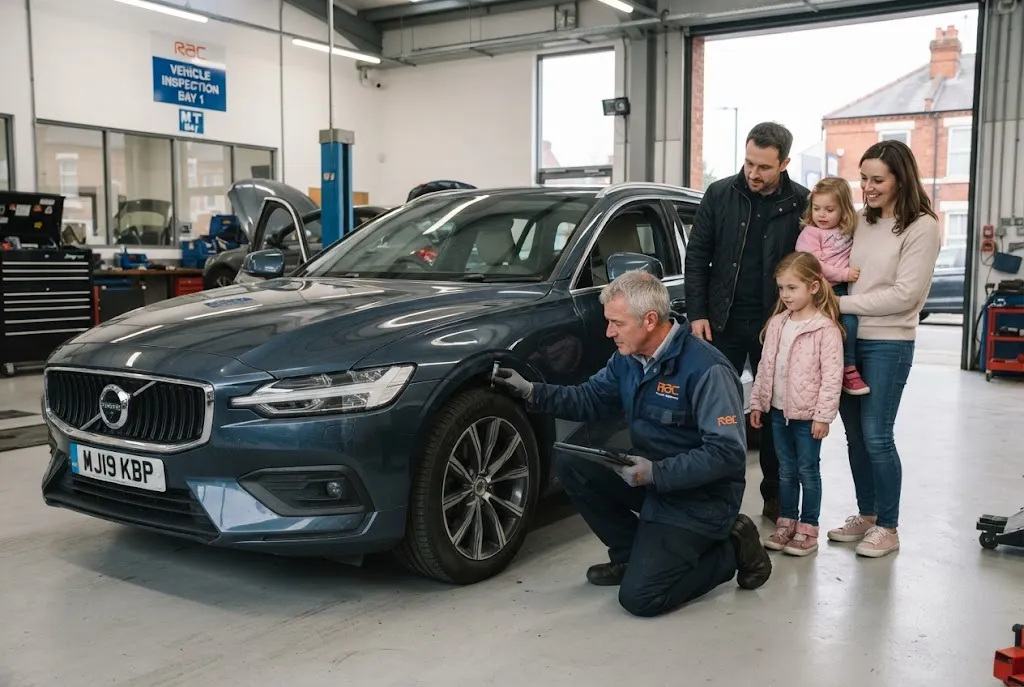
Buying a used family car is a significant decision, and a thorough vehicle inspection can help you understand the condition of a car before committing to the purchase. A clean exterior and attractive price do not necessarily tell you how well a vehicle has been maintained or whether expensive problems could be waiting underneath.
For families, reliability matters. A car may be used for school runs, commuting, shopping, holidays and longer motorway journeys, so mechanical problems can quickly become more than an inconvenience. Checking the vehicle carefully before purchase can therefore help you make a more informed decision.
This guide covers the key areas families should examine when viewing a used car, including vehicle history, service records, tyres, bodywork, interior condition, test drives and professional inspection reports.
Why Vehicle Inspection Matters When Buying a Family Car
A used car can look excellent while still having mechanical, structural or maintenance issues. Some problems are obvious, but others require experience or specialist equipment to identify.
A vehicle inspection gives you an opportunity to assess the car before ownership transfers to you. It can also provide useful information when negotiating the purchase price or deciding whether to walk away.
Families should think beyond appearance. A car that has been polished and presented well may still have worn tyres, warning lights, incomplete service records or other concerns. A systematic inspection helps prevent important details from being overlooked.
Start With the Vehicle History
The vehicle’s history should be checked before you become too invested in the purchase. Ask the seller for relevant documentation and compare the information with the vehicle itself.
Important details may include previous ownership information, recorded mileage, MOT history, outstanding finance checks and whether the vehicle has previously been written off or significantly damaged.
A history check does not replace a physical inspection. Instead, it provides another layer of information that can help you identify inconsistencies or questions that need to be investigated.
If the advertised mileage appears inconsistent with previous records, for example, ask the seller for an explanation before proceeding. Likewise, missing documentation does not automatically prove that something is wrong, but it can make it harder to establish the car’s history.
Check the Service History Carefully
The service history can tell you a great deal about how a used car has been maintained. Look for evidence that recommended servicing has been carried out at appropriate intervals.
Depending on the vehicle, documentation may include service invoices, inspection records, parts receipts and other maintenance paperwork. Digital service histories can also be relevant, particularly for newer vehicles.
Do not simply look for a stamp or invoice. Check dates, mileage and the work described. If a major maintenance item was due at a particular mileage, ask whether it has been completed.
A well-documented service history cannot guarantee that a vehicle is problem-free, but it can provide greater confidence about how the car has been cared for.
Inspect the Exterior for Warning Signs
Walk around the entire vehicle in good daylight if possible. Look at each body panel from different angles and pay attention to differences in paint colour, panel gaps and surface condition.
Potential signs worth investigating include:
- Different shades of paint between adjacent panels.
- Uneven panel gaps.
- Scratches, dents or poorly repaired damage.
- Signs of corrosion.
- Cracked lights or lenses.
- Damaged glass or mirrors.
- Tyres with unusual or uneven wear.
None of these signs automatically means that the car is unsuitable. Previous cosmetic repairs can be perfectly legitimate. The important point is to understand what happened and whether the repair appears to have been completed properly.
Do Not Forget the Tyres and Wheels
Tyres are particularly important on a family car because they affect braking, grip and handling. Check the condition of all four tyres rather than inspecting only the most visible ones.
Look for uneven tread wear, visible damage and signs that a tyre has been running incorrectly. Also check whether the tyre sizes and specifications appear appropriate for the vehicle.
If the car requires immediate tyre replacement, include that cost in your buying calculation. Our guide to tyre services explains why fitting, replacement, repairs, balancing and correct tyre pressure all form part of responsible vehicle maintenance.
Wheels should also be inspected for significant damage. A heavily kerbed wheel may be cosmetic, but serious impact damage can warrant further investigation.
Inspect the Interior and Family Features
A family car needs more than a functioning engine. Check the interior carefully and test the features you are likely to use regularly.
Check the condition and operation of:
- Seat belts and seat-belt buckles.
- Child-seat mounting points where fitted.
- Doors and door locks.
- Windows and electric controls.
- Air conditioning and heating.
- Infotainment and audio systems.
- Parking sensors and cameras.
- Dashboard controls and warning indicators.
- Boot opening mechanism and luggage space.
Look for excessive wear on the driver’s seat, steering wheel and pedals compared with the claimed mileage. Wear does not prove that the mileage is inaccurate, but an obvious mismatch is worth asking about.
What to Check Under the Bonnet
You do not need to be a mechanic to perform a basic under-bonnet inspection. With the engine switched off and the vehicle safely parked, look for obvious leaks, damaged components and signs of poor maintenance.
Fluid levels can provide useful clues, although they should not be interpreted in isolation. Look for signs of oil or coolant leaks and ask the seller about anything unusual.
Also consider the condition of hoses, belts and accessible components. If you are not confident assessing mechanical condition, this is one of the areas where professional assistance can be especially valuable.
Take the Car for a Proper Test Drive
A test drive is an important part of any used-car assessment. Ideally, drive on different types of roads so you can experience the vehicle at low and moderate speeds and, where safe and legal, at higher speeds.
Pay attention to how the car starts, accelerates, brakes and changes direction. Listen for unusual noises and notice whether the steering feels consistent.
Look for warning lights on the dashboard. Some warning lights appear briefly during startup as part of the normal system check, but they should not remain illuminated without a clear explanation.
Try the clutch and gearbox carefully if the vehicle has a manual transmission. For an automatic car, observe whether gear changes feel smooth and consistent.
AA Car Inspection and RAC Inspection Options
Some buyers choose to arrange an independent professional assessment rather than relying solely on their own checks. An AA car inspection or RAC inspection may be an option for buyers who want an experienced professional to assess a used vehicle.
The exact inspection type, coverage and reporting process can vary, so review the provider’s current terms before booking. A professional inspection is particularly worth considering if you are buying remotely, purchasing an expensive vehicle or lack confidence in assessing mechanical condition yourself.
An independent assessment can also be useful when buying privately. It gives you information from someone who is not the seller and may identify issues that are difficult for an inexperienced buyer to spot.
Understanding Pre-Purchase Inspection Reports
A pre-purchase inspection report can provide a structured assessment of the vehicle’s condition. Depending on the service, it may cover mechanical components, bodywork, tyres, interior features and other areas.
Read the report carefully rather than focusing only on its overall conclusion. Minor findings can still be useful when estimating future maintenance costs, while significant issues may influence whether the vehicle represents good value.
Remember that an inspection represents the vehicle’s condition at the time it was assessed. It is not a guarantee that the car will never develop a fault after purchase.
How Inspection Reports Can Help With Negotiation
A professional report can be particularly useful when the vehicle has defects that are not reflected in the asking price. If the inspection identifies worn tyres, brake work or other maintenance requirements, you can calculate the likely cost and discuss it with the seller.
The seller may agree to complete certain repairs, reduce the asking price or simply decline to negotiate. You then have a clearer basis for deciding whether to proceed.
A report should not be used as a reason to demand a discount for every minor imperfection. Used vehicles naturally show some signs of age and use. Focus on findings that materially affect safety, reliability, future costs or value.
Check the Vehicle’s Practical Suitability
A mechanically sound car can still be the wrong family vehicle. Consider how well it meets your everyday requirements before making a purchase.
Check whether child seats fit comfortably, whether there is enough rear-seat space and whether the boot can accommodate your normal luggage. If you regularly travel with a pushchair, sports equipment or other bulky items, test the available space rather than relying on advertised boot capacity alone.
Think about fuel economy, insurance costs, road tax where applicable, servicing requirements and likely tyre costs. These factors contribute to the vehicle’s overall ownership cost.
Red Flags That Should Make You Pause
Some circumstances deserve extra caution during a used-car purchase. These may include a seller who refuses an independent inspection, incomplete paperwork, unexplained mileage discrepancies, significant warning lights or pressure to make an immediate payment.
Be cautious if the vehicle’s condition does not match the seller’s description. A few minor discrepancies are not necessarily serious, but multiple unexplained issues can indicate that further investigation is required.
If the seller will not allow a reasonable opportunity to inspect and test the car, consider whether it is worth proceeding. There are usually other vehicles available, and rushing into a purchase can create expensive problems later.
Vehicle Inspection Costs vs Potential Repair Costs
Some buyers hesitate to pay for an independent inspection because they want to keep the purchase cost as low as possible. However, the cost of an inspection should be considered alongside the potential expense of discovering a major problem after purchase.
An inspection cannot eliminate risk, but it may identify issues before you commit to the vehicle. Even when no major problem is found, the assessment can provide useful reassurance and help you understand upcoming maintenance requirements.
If an existing family car develops an unexpected fault, our guide to repair finance covers ways families can think about repair bills, payment arrangements and emergency repair budgeting.
A Simple Used Family Car Inspection Checklist
Before viewing a vehicle, save a simple checklist on your phone so you do not forget important areas during the appointment.
- Check the vehicle history.
- Review the service history.
- Confirm the mileage and documentation.
- Inspect bodywork and paint.
- Check tyres and wheels.
- Look for warning lights.
- Test interior equipment.
- Inspect accessible engine-bay components.
- Take a proper test drive.
- Ask about previous repairs or accidents.
- Consider an independent pre-purchase inspection.
- Calculate likely immediate maintenance costs.
Completing these checks does not require specialist knowledge, but it can help you ask better questions and identify areas that deserve professional attention.
Final Thoughts on Vehicle Inspection
A thorough vehicle inspection can be one of the most useful steps when buying a used family car. Looking beyond appearance and checking history, servicing, tyres, interior features and driving behaviour gives you a more complete picture of the vehicle.
For additional confidence, an independent inspection can provide a professional assessment before you commit. Whether you choose an AA car inspection, RAC inspection or another reputable inspection service, check exactly what is included in the report.
The objective is not to find a perfect used car. Every older vehicle will have some signs of use. Instead, you want to understand the car’s condition, identify meaningful risks and make a buying decision based on realistic future ownership costs.
Taking this approach can help families avoid avoidable surprises and choose a used vehicle that is better suited to their needs and budget.
