

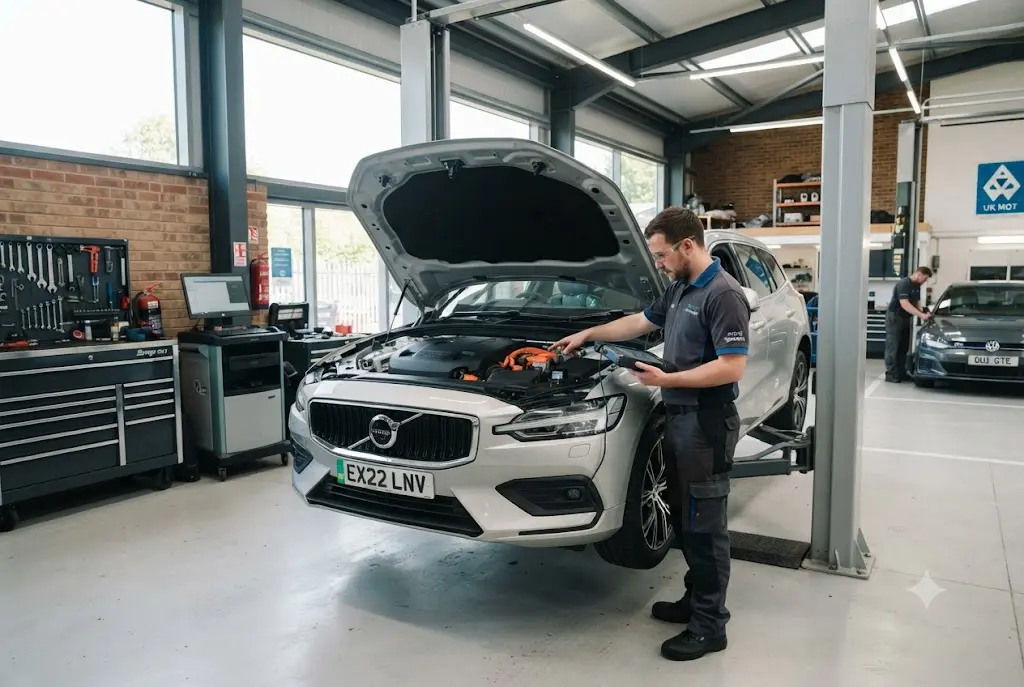
Hybrid servicing is an important part of keeping a hybrid family car reliable, efficient and safe to drive. Although hybrid vehicles can reduce fuel consumption and may place less wear on some components, they still require regular maintenance. Owners need to consider the petrol or diesel engine, brakes, tyres, fluids, electrical systems and hybrid battery as part of the overall maintenance picture.
For families, dependable transport matters. A hybrid may be used for school runs, commuting, shopping, holidays and longer journeys, so understanding its servicing requirements can help prevent avoidable problems.
The good news is that hybrid ownership does not necessarily mean complicated day-to-day maintenance. However, choosing a garage with suitable knowledge and equipment is particularly important because hybrid vehicles contain high-voltage systems that require appropriate precautions when technicians work on them.
What Does Hybrid Servicing Include?
A hybrid car combines an internal combustion engine with an electric motor and battery system. The exact technology varies between manufacturers and models, so servicing requirements should always be checked against the vehicle manufacturer’s schedule.
A typical service may involve many of the same checks carried out on a conventional vehicle. Depending on the vehicle and service level, these can include:
- Engine oil and filter checks or replacement
- Brake inspection
- Tyre inspection
- Fluid level checks
- Suspension and steering checks
- Lights and safety equipment checks
- Diagnostic system checks
- Inspection of hybrid-system components
- Battery-related health checks where applicable
Not every service includes every item, and intervals differ between manufacturers. Your owner’s handbook and official service schedule should therefore be the starting point.
Why Hybrid Servicing Matters for Family Cars
Family vehicles often accumulate significant mileage because they are used for several purposes every day. Regular maintenance helps identify developing problems before they become more disruptive or expensive.
Hybrid systems can also change how some components are used. Regenerative braking, for example, can reduce reliance on the conventional friction brakes in certain driving conditions. That does not mean brake inspection can be ignored.
Tyres, suspension, steering, lights and other safety-critical components still require attention. The UK government states that motorists are responsible for ensuring their vehicle remains roadworthy, even when it has a current MOT certificate. GOV.UK guidance on vehicle safety also advises drivers to follow the manufacturer’s handbook for service and maintenance information.
Hybrid Servicing and Battery Care
The hybrid battery is one of the most important differences between a hybrid vehicle and a conventional petrol or diesel car.
Owners sometimes worry that battery degradation automatically means an immediate and extremely expensive repair. In reality, battery design, warranty arrangements, maintenance procedures and replacement costs vary considerably between manufacturers and individual models.
Good battery care starts with following the manufacturer’s recommendations. Do not assume that general advice for one hybrid applies to every other model.
Some manufacturers provide specific battery health checks as part of their servicing programmes. Toyota, for example, says its Hybrid Service includes checks of the hybrid system and hybrid battery. Toyota also states that eligible vehicles can receive additional hybrid battery cover after qualifying checks, subject to its terms and conditions.
This is one reason owners should keep servicing records and understand exactly what their manufacturer offers.
Toyota Hybrid Service: What Owners Should Know
Toyota is one of the most established manufacturers in the hybrid market, so its servicing approach is often relevant to UK families considering or already owning a hybrid Toyota.
The Toyota UK currently states that its hybrids should generally be serviced every 12 months or 10,000 miles, whichever comes first, although owners should check the requirements for their specific vehicle. Toyota also offers hybrid-system and battery checks as part of its service programme.
A Toyota hybrid service can therefore provide more than a basic oil change. The exact work depends on the vehicle, age, mileage and service level.
Toyota also publishes fixed-price servicing for various models. Current published examples include separate pricing for family cars and SUVs such as the Corolla, Prius, Toyota C-HR and RAV4, although prices can change and owners should check the latest manufacturer information before booking.
Do Hybrid Cars Need Specialist Garages?
Not every routine task on a hybrid requires a specialist hybrid workshop. However, work involving the high-voltage electrical system should be carried out by people with the appropriate skills, training and equipment.
The Health and Safety Executive explains that hybrid and electric vehicles can contain high-voltage systems and that people carrying out repair and maintenance work may need additional skills, knowledge, specialist tools and equipment.
For this reason, ask a garage about its experience with your particular hybrid before booking work. This is especially important if the job involves the hybrid battery, high-voltage cables, electric motor or other components associated with the high-voltage system.
If you are choosing between workshops, our guide to garage comparison can help you assess factors such as vehicle expertise, customer reviews, pricing and workshop suitability.
Hybrid Maintenance Beyond the Battery
It is easy to focus on the battery when discussing hybrids, but much of the vehicle still needs conventional maintenance.
Tyres
Tyres remain essential to braking, steering and road grip. Check them regularly for correct pressure, visible damage and uneven wear.
If a hybrid develops unusual steering behaviour or uneven tyre wear, ask a suitable garage to inspect the wheels, suspension and steering system. A wheel alignment problem can sometimes affect handling and tyre life.
Our guide to wheel alignment explains the signs that may indicate your vehicle needs its alignment checked.
Brakes
Regenerative braking can help slow a hybrid while recovering energy, but conventional braking components remain important. Brake discs, pads and other components should still be inspected according to the manufacturer’s maintenance schedule and the vehicle’s condition.
Fluids and Filters
Hybrid vehicles can still have an engine requiring oil and filter maintenance. Coolant and other fluids may also require inspection or replacement at specified intervals.
Do not assume that a hybrid is maintenance-free simply because it can operate electrically for some of its journeys.
How Often Should Hybrid Cars Be Serviced?
There is no universal interval for every hybrid model. Service schedules vary according to manufacturer, model, engine, powertrain and intended use.
Some manufacturers specify annual servicing, while others may use different time or mileage intervals. Toyota UK, for example, currently states that most Toyota hybrids should be serviced every 12 months or 10,000 miles, whichever comes first, while noting that some vehicles can have different schedules.
The safest approach is to follow your vehicle’s official maintenance schedule rather than relying on a generic internet recommendation.
Families that cover high annual mileage should be particularly careful about tracking both mileage and time. A vehicle that is used heavily may reach its mileage interval earlier than expected.
Warning Signs Your Hybrid Needs Attention
Routine servicing is important, but drivers should not wait for the next scheduled appointment if something unusual happens.
Potential warning signs can include:
- Hybrid-system warning lights
- Unexpected changes in vehicle performance
- Unusual braking behaviour
- Strange noises or vibrations
- Difficulty starting or entering the vehicle’s ready mode
- Unusual fuel consumption changes
- Problems with charging on a plug-in hybrid
- Tyre wear or steering changes
A warning message does not necessarily mean the most expensive component has failed. Proper diagnosis is important before any major repair is authorised.
What Is Hybrid Maintenance Like for Families?
For most families, hybrid ownership can fit into a normal vehicle maintenance routine. The key difference is understanding that the vehicle combines conventional mechanical components with electrical systems.
Daily driving habits also matter. Smooth acceleration, sensible braking and following the manufacturer’s operating recommendations can help drivers make the most of the vehicle’s hybrid system.
Families should also keep their servicing documentation in one place. Records can show when maintenance was completed and may be useful when discussing warranty or battery-care arrangements with a manufacturer.
Hybrid Ownership and Long-Term Costs
The cost of owning a hybrid depends on many factors, including the vehicle’s purchase price, fuel consumption, insurance, tyres, servicing, repairs, mileage and depreciation.
It is therefore misleading to assume that every hybrid will automatically cost less to maintain than every conventional car.
However, some hybrid designs can reduce wear on particular components. Toyota, for example, notes that its hybrid vehicles can experience less brake-pad wear because of regenerative braking.
The best way to understand your own costs is to follow the specific maintenance schedule for your vehicle and keep records of actual servicing and repair expenses.
Choosing a Garage for Hybrid Services
When looking for hybrid services, ask the garage several practical questions before making an appointment.
- Does the workshop regularly service hybrid vehicles?
- Does it have technicians trained for hybrid systems?
- Can it perform the specific service your vehicle requires?
- Does it have suitable diagnostic equipment?
- Can it safely handle high-voltage components when required?
- Will the garage explain additional work before carrying it out?
- Does it provide clear servicing documentation?
For routine work, a reputable independent workshop with appropriate hybrid capability may be suitable. For certain manufacturer-specific requirements, an authorised dealer may offer advantages.
What matters most is matching the workshop’s expertise to the work being requested.
Hybrid Cars and Eco-Friendly Driving
Hybrid technology can support more efficient driving by combining an internal combustion engine with electric propulsion. Depending on the model and driving conditions, the system can use electric power at appropriate times and recover energy during deceleration.
However, eco-friendly driving is not simply about owning a hybrid. Driving style, journey length, vehicle load, tyre pressures and maintenance can all affect efficiency.
Keeping tyres correctly inflated, removing unnecessary weight and avoiding aggressive acceleration can help support efficient driving. Regular maintenance also helps ensure the vehicle continues operating as intended.
Can You Service a Hybrid at a Normal Garage?
Some routine maintenance can be carried out by a capable general garage, but you should never assume that every workshop is prepared to work on hybrid systems.
The HSE specifically highlights the additional risks associated with electric and hybrid vehicles and the need for appropriate competence when carrying out repair and maintenance work.
For this reason, ask directly about hybrid experience before booking. If the proposed work involves high-voltage components, make sure the workshop has the relevant capability rather than treating the car like a conventional petrol vehicle.
Hybrid Servicing Checklist for UK Families
Before booking your next service, check the following:
- Read the manufacturer’s current service schedule.
- Check the vehicle’s mileage and previous service date.
- Ask whether the garage has hybrid-trained technicians.
- Confirm whether a hybrid battery health check is available or required.
- Check tyre condition and pressures.
- Pay attention to brake performance and warning lights.
- Keep service invoices and battery-related documentation.
- Ask for approval before additional repair work is carried out.
- Use manufacturer guidance for model-specific requirements.
Final Thoughts on Hybrid Servicing
Hybrid servicing should be treated as an essential part of responsible hybrid ownership rather than something that can be postponed because the vehicle uses electric assistance.
The right maintenance plan covers both the conventional mechanical components and the hybrid system. Regular servicing, battery health checks where applicable, tyre inspections and brake maintenance can all contribute to dependable family motoring.
Most importantly, choose a garage with suitable knowledge for your vehicle and the work involved. High-voltage hybrid systems require appropriate competence and safety procedures, so specialist experience matters when electrical or battery-related work is required.
For general vehicle maintenance and safety requirements, drivers can also refer to the Highway Code guidance on vehicle maintenance and safety.
